The Centre for the Study of African Economies (CSAE) is a development economics research centre based at the University of Oxford, with researchers in the Blavatnik School of Government, the Department of Economics, and the Oxford Department of International Development.
About the centre
Founded in 1986, the CSAE has been researching Economic Development in Africa for 40 years.
The CSAE aims to make a difference by providing impartial and impactful advice to policymakers and advisers in developing countries. They engage on an international level with organisations to challenge strategies on policy advice, build connections, and they work with academic institutions in developing countries to strengthen their research capacity.
The research undertaken at the CSAE is both microeconomic and macroeconomic. This means that it looks at issues facing individuals, farmers, entrepreneurs or companies, as much as issues in relation to the overall economy such as inflation and exchange rate setting. The objective in developing these areas has been to build the research infrastructure that will allow researchers to pursue the CSAE's primary research objective – the production of excellent research geared to an improvement in economic performance in developing countries.
The Centre organises the CSAE Conference: Economic Development in Africa, a large annual conference held in Oxford, UK, and the Economic Development in Africa Workshop, hosted at a different academic institution in Africa each year. Alongside this, the Centre also runs a programme of lunchtime seminars and research workshops during term, and other events throughout the year.
CSAE Engagement Profiles
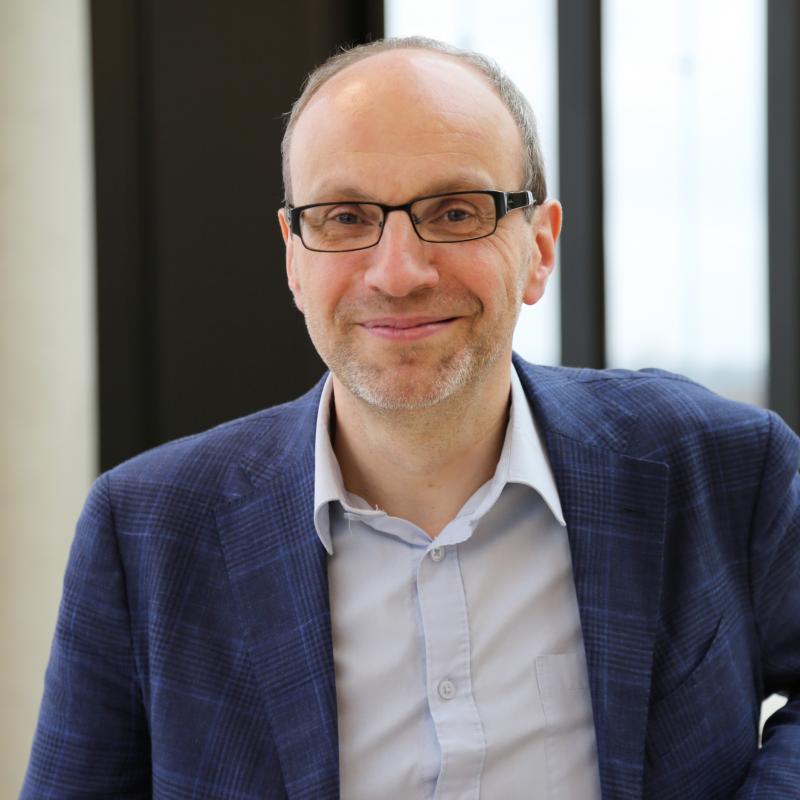
Professor Stefan Dercon, Director of the CSAE, discusses his work at the CSAE and how academics are in a position to really make a difference.
CSAE Engagement Profiles
Professor Stefan Dercon, Director of the CSAE, discusses his work at the CSAE and how academics are in a position to really make a difference.
CSAE at 40: In conversation with Sir Paul Collier
Current CSAE Director, Stefan Dercon, talks to Sir Paul Collier, Founding Director of the CSAE and Professor at the Blavatnik School of Government about the origins of the Centre, pioneering research, and the CSAE's legacy as a place of integrity and neutral ground.
CSAE at 40: In conversation with Sir Paul Collier
Current CSAE Director, Stefan Dercon, talks to Sir Paul Collier, Founding Director of the CSAE and Professor at the Blavatnik School of Government about the origins of the Centre, pioneering research, and the CSAE's legacy as a place of integrity and neutral ground.
Mind and Behaviour Research Group
The Mind and Behaviour Research Group (MBRG) brings together economists, psychiatrists and psychologists based at the University of Oxford as part of the Centre for the Study of African Economies at the Blavatnik School of Government. Their aim is to investigate the psychological impact of living in poverty and use findings to improve policy programmes.
Economic Policy Network (EPN)
The Economic Policy Network (EPN) helps local leaders build and sustain growth coalitions across politics, business, the civil service, and the public.
The EPN is a small group of independent or university-affiliated specialists with deep practical economic, political, and policymaking experience. They help to create economic growth strategies that are not just technically sound, but politically viable, understanding that our partners need to navigate complex political landscapes to build and sustain support for tough reforms.
Open Political Economy Analysis Programme (Open PEA)
The Open Political Economy Analysis Programme (Open PEA) delivers practical political economy analysis on binding constraints in growth and development, with action-oriented advice for increasing the effectiveness of policy and investment, regardless of source of funds. Our products are public goods: high quality, open access, and written in plain language for mainstream audiences.
The Poverty Reduction, Social Protection and Employment Research Programme (PROSPER)
PROSPER tackles barriers to employment growth in low- and middle-income countries.
Launched in 2025 and anchored at the Blavatnik School, PROSPER is a collaboration between world-leading researchers and governments and NGOs in South Africa and Kenya, seeking to develop evidence-based interventions which can be delivered at scale to increase hiring and improve job quality.