
About the project
The Oxford Covid-19 Government Response Tracker (OxCGRT) is a project that collected information on policy measures to tackle COVID-19 over the years 2020, 2021, and 2022.
The team is continuing research into the impacts and determinants of pandemic policy and working with partners to devise new approaches to data collection that can be deployed quickly in the face of future pandemics or global emergencies.
The OxCGRT dataset was collected by a team of over 1500 volunteers and published in real-time to understand variations in government responses and the effects of different policies on the pandemic and other outcomes of interest.
By May 2023, most countries have lifted their COVID-19-related policies and the WHO declared an end to the public health emergency of international concern. The OxCGRT project, therefore, shifted its primary focus from collecting and reviewing data on government responses to the pandemic to carrying out cutting-edge research using the indicators we created in the past three years and providing decision-makers with evidence-based policy recommendations on the most effective responses in fighting future pandemics and epidemics. Our efforts are now directed at identifying the most pressing research questions on pandemic responses as well as answering these questions through rigorous scientific analysis.
Although a substantial body of scientific research on COVID-19 government responses has already been published, many research questions remain unanswered. Current empirical evidence strongly supports the view that stronger and more timely government responses were crucial in curbing the spread of the virus, yet a lack of consensus prevails on many other issues. The OxCGRT has identified numerous significant avenues for future research. So, in the next years, our researchers will analyse our authoritative dataset with innovative quantitative and qualitative methods to delve deeper into different government responses to the COVID-19 pandemic and shed light on the causal links between pandemic responses and relevant social, political, and economic factors. By answering these questions, the OxCGRT project will continue to play a key role in building a safer, healthier, and more prosperous world that is better prepared for the next global virus.
Paragraph title
Call for presentations: OxCGRT seminar series
The OxCGRT Seminar Series aims to provide an platform for scholars working on COVID-19 responses, offering an opportunity to present and discuss their ongoing research work as well as to connect with the broader research community.
Current team
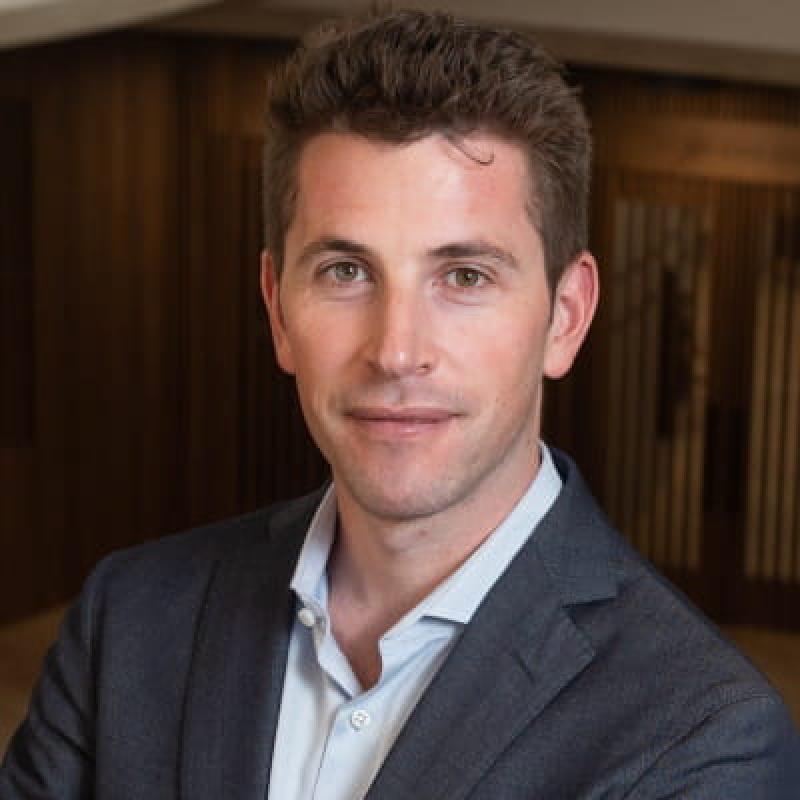

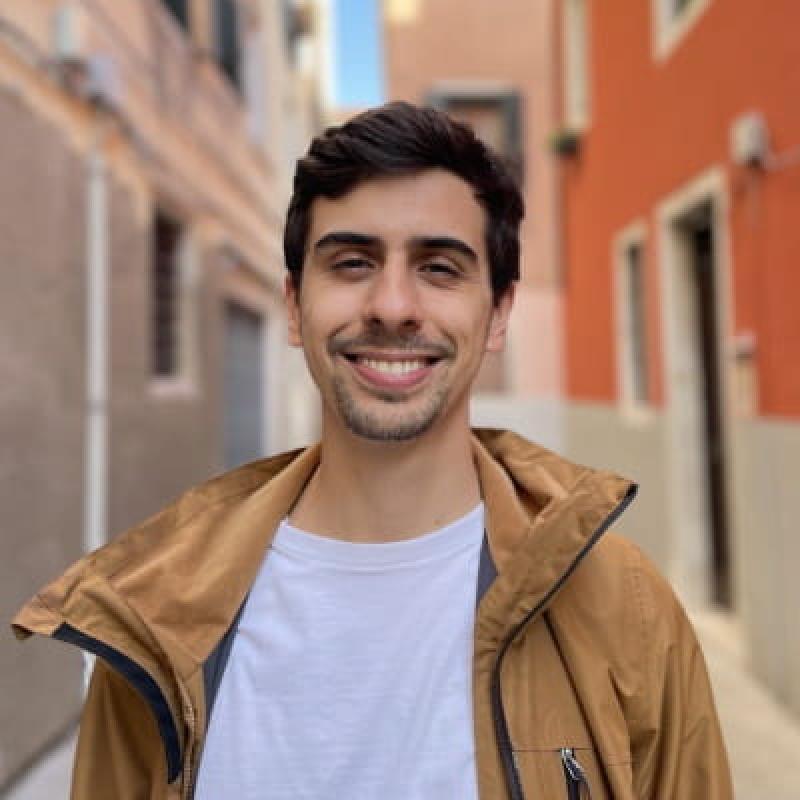
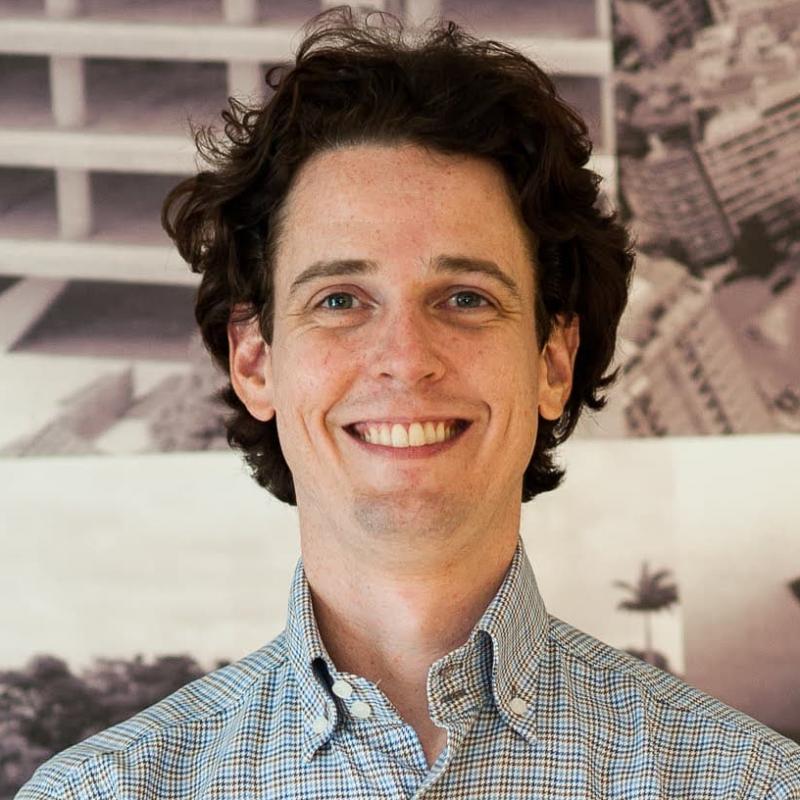
Beatriz Kira
Research Associate

Clare Wenham
Research Associate
Seung Hoon Chae
Research Associate

Michael Bang Petersen
Research Associate
Yuxi Zhang
Research Associate
Sarah P. Jones
Research Associate
Andrea Vaccaro
Postdoctoral Research Fellow
DATASET
The OxCGRT has created an authoritative global dataset of COVID-19 policy responses. The dataset reports three years of policy settings for over 180 countries and over 200 subnational jurisdictions, covering 23 policy indicators, such as school closures, travel restrictions, mask mandates, and vaccination policies. The indicators are also aggregated into a suite of policy indices. Since its launch, the tracker has become a key global resource used by policymakers worldwide and cited in thousands of COVID-19 research studies.
For almost all jurisdictions, the OxCGRT data runs from 1 January 2020 to 31 December 2022. The data for individual Chinese provinces continues until 28 February 2023.
You can access the data here: https://github.com/OxCGRT/covid-policy-dataset
For information and documentation on this dataset, please refer to the final version of our working paper.
Visualisations
Interactive visualisations of each policy indicator are available at
Credits
Recommended reference for academic publications: Thomas Hale, Noam Angrist, Rafael Goldszmidt, Beatriz Kira, Anna Petherick, Toby Phillips, Samuel Webster, Emily Cameron-Blake, Laura Hallas, Saptarshi Majumdar, and Helen Tatlow. (2021). “A global panel database of pandemic policies (Oxford COVID-19 Government Response Tracker).” Nature Human Behaviour. https://doi.org/10.1038/s41562-021-01079-8
Data use policy: Creative Commons Attribution CC BY 4.0 standard.
The OxCGRT dataset was created by more than 1500 citizen scientists all around the world who volunteered their time to search for, interpret, and record policy actions during an unprecedented crisis. The resulting dataset was only possible because of the hard work of this global team of data collectors.
Team that managed the OxCGRT


Hao Zha
Country Lead, China

Luyao Ren
Research Assistant, China

Julia Sampaio
Country Lead, Brazil
Roy Barnes
Country Lead, Australia
Helen Tatlow
Data Systems Manager
Lucy Dixon
Project Officer
Jodie Elms
Project Officer
Maria Luciano
Country Lead, Brazil
Annalena Pott
Researcher and Policy Officer
Alice Cavalieri
Country Lead, Italy
Liz Ribeiro
Country Lead, Brazil
Thayslene Oliviera
Research Assistant
Andrew Wood
Research Assistant
Laura Hallas
Research Assistant
Saptarshi Majumdar
Research Assistant
Emily Cameron-Blake
Research and Policy Officer
Jessica Anania
Research Assistant
Martina Di Folco
Policy and Engagement Officer
Noam Angrist
Adviser
Sam Webster
Research Associate
Project team
-
View all contributors to the project (A–L)
Data was collected from public sources by a team of more than 1700 university students, staff and volunteers from every part of the world. Contributing team:
Aaron Ni, Abdulafeez Katibi Abdulkadir, Abdullahi Muhammad, Abeba Aleka Kebede, Abey Blessing, Abigail Chen, Abigail Escobar, Abigail Lourdes Contreiras Martinez, Abigale Shettig, Abiola Lawal, Abubakar Sadiq Usman, Adam Wade, Adava Eneze, Adebanwo Kuye, Adedoyin Oyekan, Adel Molnar, Adeshola Usman, Adil Sayeed, Aditya Lolla, Adrian Hoti, Adrian Wang Xinting, Agatha Picetti Gonçalves da Silva, Agustin Blasco, Ahad Kesaria, Ahmed Safar, Aida Tsegezab Gebregergis, Aidana Arynbek, Aikedan Ainiwaer, Ailen Di Marzio, Akane Fujimoto, Akanksha Bhatia, Akeemat Ayinla, Akhil Rayasam, Akhila Kadgathur Jayaram, Akshata Gupta, Alaa Dafallah, Alan An, Alejandrina Cripovich, Alex Chen, Alex Epshtein, Alex Lap Ting Cheuk, Alex Qin, Alex Zhuang, Alexander Collin, Alexander Trousdale, Alexandra Boothroyd, Alexandre Duponcheele, Alexis Rakochy, Alexsander Silva Farias, Aleysha Rattray, Alfie Killigrew, Alfredo Ortega, Alice Cavalieri, Alice Eddershaw, Alice Graham, Alice Secheresse, Alice Vodden, Alice Worsley, Alina Romani Pozo, Aline Luiza Rezende Regina Santana, Aline Sayuri Konno, Aline Tognini, Alisha Sood, Allen Haugh, Allison Yu, Alonso Moran, Alyssa Lindrose, Amber Ye, Amit Kumar Mehto, Amod Moharil, Amun Nadeem, Ana Catarina Baptista, Ana Lorena Guerrero, Ana Lucia Villagran, Ana Luíza Albuquerque, Ana Paula Pereira dos Passos, Ana Virginia Lira Flor, Anabella Abadi, Anagha Tirumalai, Anahi Alvarez-Amaro, Anandam Sarcar, Andre Houang, Andrea Garaiova, Andrea Klaric, Andrea Salhuana Bellodas, Andrew Brown, Andrew Lupati, Andrew Rapp, Andrew Read, Andrew Wagner, Andrew Wong, Andrew Wood, Andrey Krachkov, Andy Hu, Aneesa Khan, Aneri Shah, Angus Padley, Anika Buch, Anila Jose, Anindita K. Listya, Anita Kerubo, Anita Pant, Anjali Viswamohanan, Ankit Raj, Ann Hagen, Anna Bruvere, Anna Casey, Anna Jang, Anna Malandrino, Anna Matos, Anna Petherick, Anna Welsh, Annalena Pott, Annamarie Candler, Anne Hahn, Anne Sofie Nissen, Anneloes Hoff, Annika Browne, Anouka Saha, Anqi Tang, Anthony Michael Hachem, Anthony Sudarmawan, Antonio Terrazas, Anu Adeyemi, Anuki Edirisinghe, Anupah Makoond Makoond, Anusha Wani, Anushka Shah, Aparajita Pathak, Apoorva Mehta, Arabella Abad, Ariana Detmar, Arianna Marcolin, Ariq Hatibie, Arisa Sadeghpour, Arkar Hein, Arlette Misengabu Kayembe, Armand Patel, Arsalaan Asad, Arthur Lau, Arwa Gamil, Asanti Gurre, Ashika Thomas, Ashleigh Shipton, Ashley Gilliam, Ashley McNeil, Ashraf Marasharin, Ashton Wagner, Asiya Kamber Zaidi, Atharva Deshmukh, Athena Zeng, Athina Efthymiou, Athira Zuhaira Ahmad Yusri, Augusto Guajardo, Aurelia Suarly, Aviery Boone, Avneesh Beejah, Axel Nurdin, Ayan Habane, Ayanna Griffith, Ayesa Ghale, Ayla Mueen, Ayomide Israel, Aysegul Elbasi, Azeez Idowu Adiatu, Babu Ahamed, Baoqing Jiang, Bárbara Prado Simão, Barbora Bacyte, Bassem Chakroun, Bat-Orgil Bat-Erdene, Bayleigh Jefferson, Beatric Cuellar, Beatriz Cristina Rodrigues Silva, Beatriz Franco, Beatriz Kira, Beatriz Morgado Marcoje, Beatriz Pioltine Macedo Costato, Ben Ignac, Ben Luria, Ben Weber, Benjamin Farias, Benjamin Parker, Benjamin Tsao, Benny Wijaya Sunggono, Bernard Lao, Bernardo Andretti, Bethany Rodgers, Bethel Zerai Gebremedhin, Bianca Alves Almeida Souza, Bill McCluskey, Blaire Ng, Blessing Ajimoti, Bo Jia, Brenda Gonzalez, Briana Owirodu, Bridget Ogbuagu, Bridget Wang, Brittany James, Bruna Biesdorf Barro, Bruna Maria da Silva Ruys, Bruno da Cunha de Oliveira, Bruno Dias Magalhães, Bruno Marques Schaefer, Bruno Nunes Siufi, Bruno Stucchi, Caitlin Sarro, Callum Rodgers, Callum Ryan, Camila Fernanda Ugaz Rojas, Camilla Sacchetto, Camille Bailly, Camille Bedard-Gauthier, Camille Leblanc-Martineau, Cao Jiaxing, Carla Danielli Fonseca, Carla Vila, Carlin Chen, Carlos Danquer, Carolina Beidacki, Carolina Martinelli, Carolina Medeiros, Carolina Rota, Caroline Bendl, Caroline Carthy, Caroline Frassão, Caroline Pastrano, Caroline Weglinski, Carson Gifford, Cassandra Akinde, Cassy Inman, Catalina Galuzzi, Catherine O'Donnell, Celso Coelho, Cerelia Yoong Yue, Chang Lu, Chantelle Khoo, Charankamal Padda, Charles Pinon, Charlette Kokoi, Charlie Newton, Charlotte Hsu, Charlotte Rougier, Cheng Tan, Chenxi Zhu, Chia Yin Lim, Chidimma Nwaku, Chigozie Agwuncha, Chigozie John Nwachukwu, Chloe Axford, Chloe Mayoux, Chong Zhang, Christian Ferreiro, Christian Lumley, Christian Oko, Christopher Yoannou, Chukwu Victor, Chuyun Dai, Cindy Chung, Cindy Hu, Claire Chiang, Clara Calazans Espindola, Clara Pavillet, Clara Portwood, Clara Wardi, Clarissa Fisher, Clarissa Lim, Clark Upton Myers, Claudia Sedano, Clea Boorman, Clemence Verbrugghe, Colette Morlino, Connor Lyons, Constanza Urdaneta Romano, Cornelia Santoso, Cristhian Pulido, Cristiane Pereira, Cyndelle Kwabi, Cynthia Waliaula, Da Eun Ahn, Dagny Ahrend, Dan Fay, Dan Grinevics, Dan Mocanu, Danae Nicosia, Dane Alivarius, Dang Dao Nguyen, Daniel Cabral, Daniel Guedes Silva Daher, Daniel Nwaokolo, Daniel Pereira da Costa, Daniela Costanzo de Assis Pereira, Daniela Ferraz Bertholini, Daniela Mayerova, Daniela Quiroga, Daniela Santos Gomes da Silva, Danilo Angulo Molina, Danlin Liu, Daphne Nakawesi, Dar-Yin Li, Davi Mancebo Fernandes, Davi Motta de Souza, David Doan, David Johnson, David McKinnon, David McMillan, David Romao, Dawit Bekele Tefera, Dayou Ren, Débora Alves de Lima Capri, Débora Nery Schwartz, Déborah Palacio do Sacramento, Deborah Shomuyiwa, Deepak Dayal, Delgermaa Munkhgerel, Delia Tenaglia, Denilson Soares Gomes Junior, Denise Koller, Derek Messling, Devon Tompane, Dhruv Shetty, Diane Brandt, Digvijay Uddhav Patil, Dilkini Siriwardana, Diogo Mussalem Smethurst, Dora Illei, Dorothee Sartorius, Du Yanrong, Dun S Zheng, Dylan Kruse, Edmund Derby, Edson Maia Villela Filho, Eduardo da Nóbrega Monteiro, Edward Liu, Edward O'Brien, Eera Fatima Bangi, Ehsan Rafian, Eirini Petrou, Ekin Aksoy, Elaine Fung, Eleandra Maria Prigol Meneghini, Eleanor Altamura, Eleanor Raj, Elena Sheard, Elena Terenzi, Elinor Tsen, Elisa Codonho Premazzi, Elisabeth Mira Rothweiler, Elisangela Oliveira de Freitas, Elizabeth Adeyemo, Elizabeth Oluwatobi Njoaguani, Ellen Sugrue, Elyse Dewbre, Emanuelle Louise Bordallo Quintanilha, Emerson Nairon, Emily Cameron-Blake, Emily Huang, Emily Lane, Emily Milan, Emily Nguyen, Emma Baubly, Emma Thrower, Emmanuel Benyeogor, Emmanuel Idenyi, Emmanuel Mawuli Abalo, Emmanuella Okonkwo, Emmanuelle Auguste, Enyuan Zhang, Enze Wu, Ergon Cugler de Moraes Silva, Eric Cheng, Erin Kanzig, Erindaa Magendran, Eshitha Vaz, Esraa Elnaiem, Esther Bosede Ilesanmi, Ethan Teo, Euler De Leon, Eustace Ohuakanwa, Evan DeTurk, Fabrício Motta, Faith Njeri Nyaga, Fan Su, Fang Wu, Fang Yanqi, Fangda Yu, Farah Sayad, Fareedah Oredola, Faroha Khan, Fatima Bello, Fatima Lopez Grela, Fatima Zehra Naqvi, Federico Holm, Felipe da Silva Santos, Felipe Dias Gonçalves, Felipe Natil Martins Moreira, Felipe Paiva, Felipe Rodrigues Monteiro, Femi Adebola, Fenyu Hsu, Fernanda Assuncao Tiraboschi, Fernanda Bouzan Cardoso, Finn Klebe, Finney Israel, Fiona Hsu, Fiona Knaussel, Fiona Zhong, Fong Ting Ma, Fortune Effiong, Francesca Basile, Francesca Lovell-Read, Francesca Valmorbida McSteen, Francesco Moiraghi, Francisco Olivero, Frederic Michaelsen, Fuji Jauhari, Gabriel Podesta, Gabriel Zemuner Paiva Rossini, Gabriella Henrique Targino Monteiro, Gabrielly Gonçalves de Lima Dal Pozzo, Gai Shurui, Gaia Lisi, Gaia Naccach, Gargi Thakur, Gemma Mortell, George Sheppard, George Youssef, Getu Kusa Wakoya, Giovanna Valentim, Gitarani Prastuti, Giulia Bonora, Giulia Pirolo, Giulia Vicentini, Giullia Marques Thomaz Ferreira, Glaucia Grellmann, Gleice Kelly Donato Neves, Goodnews Johnson, Grace Buchen, Grace Gong, Grace Mzumara, Grace Xu, Guanghan Gao, Guanghong Zheng, Guilherme Macedo, Guilherme Ramos, Guilherme Wainstock, Guillaume Gaillard, Guillermina Mayorca, Guillermo Miranda Cuestas, Gutam Dambekodi, Hafsat Muhammad Abubakar, Hailey Myers, Haiming Wu, Hairong Wang, Haiyun Deng, Hakeem Onasanya, Hakim Ronaque, Hala Sheikh Al Souk, Hamna Malik, Hamsini Nathan, Han Nguyen, Hana Dole, Hannah Dawson, Hannah DeBacker, Hannah Klim, Hannah Lintener, Hannah Tsang, Hannah Willyerd, Hanqing Liu, Hanshu Zhang, Hany Khalifa Mahmoud, Hao Zha, Harikharan Krishnaraju, Harish Srinivasan, Harriet Williams, Harry Zhang, Hartley Dutczak, Hassan Olayemi Alaka, Hatim Hussain, Hayley Kunde, Hazel Chu, He Jiaxin, Heili Poolsaar, Helen Henderson, Helen Tatlow, Helene Jow, Helene Lovell, Helirya Santiago de Souza, Henok Mulatu Teferi, Henrique Aguiar, Henrique Motta, Henry Annan, Hermann Pais, Hewan Kifle, Himangshu Kumar, Himani Boury, Hin Yeung, Hong Zeng, Horacio Neto, Hui Zhou, Huiting Tan, Huiwen Zheng, Huma Zile, Hunter McGuire, Hussein Kamal, Hyeonho Go, Hyerean Yoo Kang, Hyunsik Kim, Ian Chang, Ibrahim Abdulumumin, Ibrahim Muhammad Usman, Ifigenia Xifrevillar, Ikeoluwa Adeniji-Fashola, Ilya Zlotnikov, Im Chiew Ng, Inaara Sundargy, Inara Bezerra Ferreira de Sousa, India Clancy, Ingrid Maria Johansen, Iqra Amin, Ira Benson, Irena Emilia Svilpe, Isaac Vzquez, Isabel Esteves, Isabel Jorgensen, Isabel Rosa, Isabela Abade Granzieri, Isabela Blumm, Isabela Gomes Pereira, Isabella Borges Avila, Isabella Clements, Isabella Xu, Islam Mohamed, Isra Ahmed, Israa Mohammed, Israel Kates, Iyone Agboraw, Jace Holder, Jack Kendrick, Jackline Jessica, Jacob Appelbaum, Jacqueline Dobrigna, Jade Pichard, Jade Xi, Jai Wei, Jakaria Uddin, Jake Lerner, James Balzer, James Fox, James Green, James Yan, Jamie Weber, Janine Felicia Reasonda, Jasmine Anand, Jason Larson, Jason Thomas, Javier Pardo-Diaz, Jay Harley, Jaykumar Patel, Jeanna Kim, Jelsyna Chacko, Jenna Hand, Jennice Herrera, Jennifer Gunther, Jennifer Kim, Jennifer Lim, Jenny Kim, Jeremy Ng, Jes Schultz, Jess Barreto, Jessica Anania, Jessica Liana, Jessica Pulipaka, Ji Xubo, Jiahao Zhao, Jiaming Ta, Jianing Han, Jianjun Wu, Jiaxin Chai, Jiaxin Ouyang, Jiayi Deng, Jiang Jiayi, Jiayi Li, Jiayi Zhang, Jiayue Xu, Jiayun Wang, Jida Daher, Jilin Zeng, Jimmy Kwong, Jin Zhanyu, Jinghuan Ma, Jinheon Baek, Jinmeng Zhang, Jinrui Huang, Jinyuan Wang, Joan Coloma, Joanna Klimczak, Joanne Muriithi, Joanne Navales, João Claudio Faria Machado, João Felipe Marques, João Gabriel de Paula Resende, João Monteiro, João Paulo de Jesus Martins, João Pedro Conte Schmitt, João Pires Mattar, João Silva, Joao Valentini Neto, Jodie Elms, Johanna Elliott, Johannes Dommnich, John Bervin Galang, John Miller, John Okon, Jonathan Bakly, Jonathan Chan, Jonathan David Roberts, Jonathan Smith, Jonty Redman, Joohee Uhm, Jorge Luis Revilla, José Egidio Pedro da Silva, Joseph Hudson, Joseph Ssentongo, Joy Carveth, Joy Chen, Joyous Ocran, Juan David Gutierrez, Judy Cossins, Judy Nguyen, Jueqiong Zhao, Jueun Ro, Juhi Kore, Julia Abrahão Homsi, Julia Coriolano, Julia Paoli, Júlia Papa Gonçalves, Julia Sampaio, Julia Sawatzky, Juliana Bueno Refundini, Juliana Moura Bueno, Juliana Novaes, Julie Laura Mermet, Juliet O'Brien, Jun Zhang, Junu Shrestha, Justice Turzin, Justin Zhang, Justine Pfitzner, Kaisa Saarinen, Kaitlyn Green, Kaitlyn Lee, Kala Pham, Kalani Paranagama, Kamaryn Tanner, Kamile Kukleryte, Kar Chong Low, Kareena Shokar, Karen Akemi Nagai, Karolina Helnarska, Karoline Becker, Karoline Oliveira, Karthik Venkudusamy, Kashvi Chandok, Kasia Whitaker, Kaśka Kwiecien, Katarzyna Jaroszewicz, Kate Koliha, Kate Skinner, Kate Whyte, Katherine Burton, Katherine Klemperer, Katherine McCreery, Katherine Tyson, Katherine Wang, Kathryn Hok, Katiana dos Santos Telefora, Katie Tehas, Katrina Aguila, Katrina Marina, Katy Aymar, Kaushal Jain, Kaushalya Gupta, Ke Xu, Kefan Xue, Keliang Zeng, Kelly Daniels, Kelly Kon, Kess Rowe, Kethmi Gamage, Kevin Parham, Keziah Owusu-Attuahene, Khanh Vy Bui, Kiara Asuzu, Kiitan Bolajoko, Kimberly Ngo, Kirandeep Bal, Kiyomi Boyes, Koeun Jung, Kolade Victor, Kong Phui Yi, Kong Qingling, Konstantinos Tsampalas, Kou Jimei, Kris Komm, Kristen Oliveira, Kristian Clausell-Mobley, Kristie Jameson, Kristina Nguyen, Kristy Debono, Kritti Srivastava, Kurt Sant, Kylee Ladner, Lai I An, Lia Beart, Laíssa Maria da Silva Guimarães, Lakis Panteli, Lama Gaafar, Lama Khaiyat, Lana Ahmad, Landers Rene, Larissa Cristina Margarido, Larissa Vella, Laura Bigeni, Laura Boeria, Laura Chamberlain, Laura Chavez-Varela, Laura de Lisle, Laura Gaudoin, Laura Hallas, Laura Hochheim Thomé, Lauren Allison, Leah-Shai Torres, Leana Diekmann, Leanardo Puleo, Leen Aghabi, Leena Watakul, Lei Wang, Lei Yunliang, Lennox Hemingway, Leo Ruesche, Leonie Lam, Leslie Fraser, Leticia de Araujo Dias, Letícia Figueiredo Collado, Leticia Plaza, Leyan Liang, Li Luyang, Lia Beart, Liene Baptista, Liere Gonzalez Yubero, Lijun Wang, Lila Klein, Lilian Achieng Owino, Liliana Estrada Galindo, Lily Donahue, Lily McCrohan, Lin Shi, Linchen Xie, Lindsey Powell, Lingsyuan Huang, Lingxi Li, Linrui Zhong, Lione Alushula, Lisa O'Brien, Liu Yang, Liu Zhang, Liviu Dimitriu, Liz Gleeson, Liz Gomes Ribeiro, Liza Brachtendorf, Lizbeth Leija, Logan Powell, Longmei Deng, Loraine Choo, Lorena Barberia, Lorna Thomas, Louisa-Madeline Singer, Louise Nicole Sevilla, Lu Paloma, Lucas André Grejo Almendra, Lucas Damasio Faggiani, Lucas da Silva Esteves de Souza, Lucia Soriano Espinel, Lucy Dixon, Lucy Ellen, Lucy Goodfellow, Lucy Masto, Luís Guilherme Amaral, Luisa Benevides de Barros, Luiz Cantarelli, Luiz Eduardo Barbieri Bedendo, Luiz Gustavo Machado Cruz, Luiz Philipe de Souza Ferreira, Luiza Fonseca de Souza, Luiza Szczerbacki Castello Branco, Luke Mallett, Luke Muschialli, Luma Mundin Costa, Luna Rocha Dantas, Luyang Liu, and Luyao Ren. -
View all contributors to the project (M–Z)
Maclawrence Famuyiwa, Madalyn Coburn, Madelyn Flowers, Madison Harris, Maebh Gallagher, Maeve Bognini, Maeve Rolland, Maha Al-Areeqi, Maha Baig, Maheera Kamran, Mahita Yerramsetti, Mai Sugimoto, Maia Harris, Malin Bornemann, Maliyah Goka, Malou Sophie Celander, Manasi Gupta, Manasvini Moni, Manav Mutneja, Mandy Tran, Manik Aggarwal, Manikantha Nataraj, Manikarnika Dutta Dutta, Manya Sinha, Marcela Reynoso Jurado, Marcelle Amaral, Marcelle Costa Marinho, Marcelo Arruda Candido, Marcio Gomes Dourado, Marco Antonio Silva Costa, Marco Aurelio Mayer Duarte Neto, Marco Cokic, Margie Morrison, Maria Amador, Maria Andrade, Maria Carolina Cavalcante Flores Gachido, Maria Clara Leme de Oliveira, María de los Ángeles Lasa, Maria Henriquez, Maria Luciano, Maria Luisa Piatti, Maria Luiza Barreto Cazumba, Maria Puolakkainen, Maria Rocio Clark, Mariam Raheem, Mariami Jintcharadze, Mariana Costa Oliveira Morais, Mariana Emy Adati, Mariana Guedes, Mariana Lima Maia, Mariana Resende, Mariana Santos Lopes da Conceição, Mariana Victoria Braga Resende, Marianna Panteli, Marianne Lafuma, Mariano Marotta, Marie Mavrikios, Marie-Christine Kaweczka, Marília Camargo Miyashiro, Marina Belaia, Marina Fernandes Bispo de Siqueira, Marina Navarro Montilla, Marina Tovar, Mario Carvajal, Mark Chao, Mark Deakin, Mark Sibi Peter, Marlene Munoz, Marryam Ishaq, Marta Koch, Martina Di Folco, Martina Eleonora Podesta, Martina Lejtreger, Marwa Ghoname, Marya Shariq, Maryam Almsalati, Maryann Heil, Matej Bilik, Mateus Bernardes dos Santos, Mateus Henrique Muller, Matheus Lucena, Matheus Mariano, Matheus Ricardo Gonçalves Barbosa, Mathilde Berghmans, Matilde Stronell, Mattia Casula, Maurice Kirschbaum, Maurice Odiwuor, Mauricio Montelongo Quevedo, Mauricio Nardi, Max Babus, Maxime Bourdier, Maximilian Magnacca Sancho, Maya Harwood, Mayank Mawar, Mayra Henrique de Melo, Mayra Luíza Pinheiro da Silva, Medha Tirumalai, Megan McDowell, Mehdi Bennis, Melissa Leon Pons, Melissa Toh, Melody Leong, Memuna Rashid, Meskerem Aleka Kebede, Miao Wang, Michael Chen, Michael Ugochukwu Anyanwu, Michaela Papavero, Michelle Chan, Michelle Park, Michelle Sharma, Mikafui Dzotsi, Mikhela Bayes, Mila Lonnqvist, Milagros Isabel Fernández, Mildred Aziengbe, Milena Auzier Vilena, Minsoo Bae, Mir Sanim Al Mamun, Mira Kovalsky, Mirava Yuson, Miriam Pittalis, Mohamed Elsayed, Mohima Sultana, Momudat Maidoki, Monika Pyarali, Morgan David Kamanga, Morgan Grobin, Morgan O'Brien, Morgan Taylor, Morgan Woods, Mounika Tiruvaipati, Moza Ackroyd, Mphatso Kantonya, Muhammad Ali, Muhammad Ali Shah, Muktai Panchal, Murray Steel, Nada Vidyattama, Nadia Nasreddin, Nadine Dogbe, Nadya Kamenkovich, Nan Chen, Nandini Yellamelli, Nao Ogura, Naol Belema Gemechu, Nasra Habane, Natalia Brigagao, Natália Colvero Maraschin, Natalia Espinola, Natalie Khoo, Natasha Aldulaimi, Natasha Priyadarshini, Nathan Felipe Caetano da Silva, Nathan Tan, Nathaniel Dolton-Thornton, Natsuno Shinagawa, Neenah Young, Negin Shahiar, Nellie Thomson, Nethra Subramanian, Nicolas Correa Pedroso, Nicholas Wan, Nicolas Pulik, Nicole Barros, Nicole Guedes, Nicole Gump, Nicole Nanci, Nikhil Parmanand Tekwani, Niki Ziai, Nina Acharya, Nina Desgranges, Niveditha Hari, Noam Angrist, Noureddine Radouai, Ohagwu Grace, Oheema Kwakyi, Ojonugwa Abubakar, Okorie Chinagorom Ogbonnaya, Oksana Matiiash, Ola-Dahunsi Mercy Tomishola, Olaoye Damilola, Olena Skrypnikova, Olga Romanova, Olivia Cowie, Oluoma Agiri, Oluwaseun Odusanwo, Omkar Ekbote, Omnia Hamza Farah Hamza, Onche Emmanuel Philip, Onechojo Reuben Ocheja, Onkar, Onukansi Francisca Ogochukwu, Osawe Emmanuel, Pablo Bertin, Pamela Gongora, Pamela Quevedo Joia Duarte da Costa, Paola Del Carpio Ponce, Paola Schietekat Sedas, Paolo Marzi, Paresh Chaudhari, Patricia Hernandez, Patricia Silva Castillo, Patrick Rehill, Paul Anderson, Paul Dairo, Paul Lawson, Paula Helena Ferreira Ruiz, Pedro Arcain, Pedro Riquelme Gonzalez, Peihao Xu, Perkins Lui, Peter Dunlap, Pham Thao Ly Nguyen, Phillip Kim, Piyasha Chowdhury, Polly Lima, Prabhakar Chandramouli, Pragya Chaube, Prakrit Prasad, Pranav Bhatia, Prathna Srivastava, Praveen Rajendran, Precious Oluwadara Olajide, Prianka Rao, Primrose Adjepong, Priya Lakshmy Tbalasubramaniam, Priyanka Bijlani, Puja Satish, Purna Panda, Qi Qi, Qi Zhou, Qian Yang, Qianwen Ren, Qianyi Ye, Qicheng Shen, Qin Li, Qing Yang, Qinli Lin, Qinyu Wang, Qiyuan Dong, Queen Ugochinyere Alu, Quoc Nguyen, Quynh Lam Vo, Rachael Farayola, Rachel Chiang, Rachel Choy, Rachel Dixon, Rachel Peh, Rachel Young, Rachelle Koch, Radhika Nagesh, Radmanesh Khalili, Rafael Goldszmidt, Rafael Silva, Rafia Bukhari, Rahima Hanifa, Ramatu Abdul Hamid Alhassan, Rancy Chadha, Randy Taufik, Ranithri Patuwathavithane, Raphael de Magalhães Cutrim, Rashmi Madhukar, Ratu Sumampow, Ravi Vengadesh, Ray Pottebaum, Raymond Zhang, Rayssa Deps Bolelli, Rebecca Herbst, Rebecca Howarth, Rebecca Muller, Rebecca Nieves, Reed Rothe, Reem Mohammed Almannaee, Reham Aamir, Reina Li, Renata Patrícia Silva Moraes, Renee Yu, Rheanna Patel, Rhona Rahmani, Riana Pinto, Ricardo Miranda Rocha Leitao, Richard Florance, Ridwanullah Ayomide Ojewale, Riley Ylagan, Rishabh Lorhray, Rita Rasoa, Ritesh Soule, Riya Gandhi, Robert Gorwa, Roda Mohammed, Rodrigo de Sousa Escano, Rodrigo Furst, Rojan Joshi, Rose Avient, Rosie Nye, Rotimi Elisha Alao, Roxana Tatiana Flores Ibarra, Roy Barnes, Ruby Hynes, Ruel Beresford, Rui'an Cong, Ruibiao Zhu, Ruibin Liu, Ruiqiao Jiang, Ruolan Xie, Rupali Chowdhry, Rupsa Basak, Rushay Naik, Ruwa Mahdi, Saba Ajwat Ul-Hasan, Saba Mahmood, Sabrina Nanua, Safa Atitalla, Safa Khan, Sagar Grewal, Sage Buchanan, Sakina Bano Mendha, Salim Salamah, Salma Youssef, Salome Waweru, Sam Aboubacar Coulibaly, Sam Darby, Sam Webster, Samantha Harris, Sameer Yousufi, Samson Leung, Samuel Gild, Samuel Kidane, Samuel Li, Samuel Smith, San Jameson, Sandhya Laping, Sandra Sajeev, Sandra Wohlauf, Sandya Krishna, Sanjari Kalantri, Sanjeev Sabhlok, Saptarshi Majumdar, Sara Hashim, Sarah Chisholm, Sarah Umandap, Sasha Roberts, Sasidhar Gali, Satoko Matsukawa, Saumya Varma, Sayani Purohit, Scarlett Harbin-Owens, Scott Latham, Scott McCullers, Selam Iyasu, Sena Pradipta, Seorim Park, Serene Singh, Seth Howes, Seun Adebayo, Seung Eun Yi, SeungCheol Ohk, Shabana Basij-Rasikh, Shalvi Thakur, Shambo Basu Thakur, Shane Fitzsimons, Shannon Costello, Shannon Murray, Shannon Smith, Sharmi Haque, Sharon Farrell, Shelly Lim, Shengchang Zhang, Shenyue Huang, Sher Meng Tan, Sherilyn Nguyen, Shi Huajie, Shila Salleh, Shiloh Harrill, Shiman Xie, Shirley Chen, Shirui Zhou, Shiwen Lai, Shiyao Lu, Shoaib Khan, Shoko Miyahara, Shoshanna So, Shreya Mulukuntla, Shu Wen Ong, Shubo Zhang, Siddharth K Prakash, Sidney Chung, Sifan Chen, Silvia Shen, Simon Birk, Simon Powell, Simphiwe Stewart, Simran Jain, Simran Kapoor, Siqi Liu, Siyan Jiang, Sofiane Kouadria, Sofya de Bellini e Soares, Sonia Patel, Sonya Amin, Sophie Beigbeder, Sophie Bustamente, Sophie Guillaumat, Sophie Pearlman, Sriraj Aiyer, Sruthi Kallivalapil Surendran, Stefaan Sonck Thiebaut, Stefan Holzheuser, Stelle de Rocio de Souza, Stephanie Buhle, Stephanie Guyett, Stephanie Poling, Stephen Hayes, Suganthan Asokan, Suin Jang, Suryodeep Mondal, Swathi Rayasam, Syed Shoaib Hasan Rizvi, Sylvia Illescas, Sze Oh, Taís Pelinson Gomes da Silva, Tallis Everard, Tamaghn Kasibhatta, Tamoi Fujii, Tania Bourouphael, Tania Calle, Tanya Sethi, Tanyah Hameed, Tara Chen, Tatiani Schmitt, Tatsuya Yasui, Taylor Keating, Taylor Qin, Tayná Mendes, Tayo Adefolalu, Tebello Qhotsokoane, Teresa Soter, Teruki Takiguchi, Tetsekela Anyiam-Osigwe, Thais Pinheiro Amorim, Thao Nguyen, Thayla Bicalho Bertolozzi, Thays Marques, Theo Bernard, Thi Yen Chi Nguyen, Thiago William Pereira Barcelos, Thin Pa Pa Hlaing, Thomas Benson, Thomas Birdseye, Thomás Castanheira Manfrinatti, Thomas Hale, Thomas Hodgson, Thomas Mbuotidem Jeremiah, Thomas Rowland, Thomas Stubbs, Thuy An Pham, Thuy Nguyen, Tianchu Lei, Tianjing Liu, Ticiana Palhares Sampaio, Tiffanie Cao, Tiffany Harianto, Tiffany Loera, Tijani Abisola Latifat, Tilbe Atav, Tim McGowan, Tim Nusser, Tina Chim, Tiphaine Le Corre, Tiwa Ighomuaye, Toby Phillips, Toluwanimi Adeyanju, Tomas Listrani, Tong Si, Treasure Udechukwu, Treyce Money, Tse Hiu Hung, Twan van der Togt, Tzina Xazinah, Ubah Daahir, Udit Chauhan, Ulla Mikkelsen, Ulrike Gruber-Gremlich, Uma Mani, Urmila Pandey, Ursula Panzner, Ursule Demael, Usman Abubakar Haruna, Uttara Kudesia, Uttara Narayan, Uyen Le, Vanilda Chaves, Vara Anoosha Vijjapu, Varad Dinesh Godase, Varsha Reddy, Varun Korutla, Varun Vivek Bansal, Vedant Shukla, Vedika Pillai, Venerabla Mussa Massanja, Veronica Mika Prasad, Veronique Gauthier, Vian Wagatsuma, Victor Lau, Victoria Cantu, Victoria Cavero, Victoria Leurino, Vijay Krishna Palepu, Vinícius Sanches Pontirolle, Vinicius Tadeu Silverio dos Santos, Violet Simpson, Viraj Aditya, Vittoria Porciuncula Horch, Vivek Mynam, Viviane de Assis Ignacio, Waasae Ayyaz, Walter Vinicius Ribeiro Cancelieri, Wang Pok Lo, Wang Wanying, Wang Yuanzhuo, Wei Sean Melvin Ting, Weijia Shen, Weiyi Huang, Weiyi Zhang, Wenjie Xie, Wenqing Wu, Wenxuan Zhou, Wenyuan Feng, Will Bennett, Will Marshall, Will McFarlane, Will Torness, William Boulton, William Dowling, William Hart, William Kemp, William Wang, Windy Yu, Winni Yang, Xema Pathak, Xiangyun Ren, Xiaohan Xu, Xiaojuan Hu, Xiaotong Chen, Xiaoyi Ren, Xiaoyue Zhong, Xin Li, Xin-Ci Lum, Xing Ann Ewe, Xingyan Lin, Xingyue, Xinhui Ma, Xinlu Tian, Xinrui Wang, Xinyi Cui, Xinyu Shi, Xisen Wang, Xiuyi Zheng, Xu Yinghao, Xuewei He, Xueyan Liu, Xutong Li, Yago Evangelista Tavares de Souza, Yan Xinyu, Yang Zhao, Yanina Borzykh, Yaning Su, Yanjun Lu, Yanshi, Yanying Lin, Yao Zhang, Yaosuyang, Yaowen Deng, Yaqub Yousuf, Yashaswini Gannabathul, Yasmin de Sousa Pinheiro, Yasmin Hamdy, Yawen Xie, Ye Chen, Yexuan Zhu, Yi Zhou, Yibei He, Yifan Pei, Yifei Xiao, Yihan Wang, Yihang Liu, Yihao Sun, Yimei Liu, Ying Kei Ma, Ying Yu, Yinqiu Zheng, Yintong Liu, Yiran Fan, Yishan Yuan, Yiwen Fan, Yiwen Sun, Yiwen Zhang, Yixiao Mei, Yixin Xu, Yizhou Pan, Yu Wen Wong, Yu Zin Wint, Yuan Fang, Yuan Zhou, Yuankai Jiang, Yue (Nicole) Wu, Yue Jian, Yue Qiao, Yue Zhang, Yueying Zhang, Yujin Kim, Yulia Taranova, Yun Zhu, Yusuff Adebayo Adebisi, Yuwei Wang, Yuwei Wu, Yuxi Zhang, Yuxin Ma, Yuxin Pu, Yuyin Yao, Yuzhen Chen, Zachariah Coleman, Zachary Adnane, Zachary Parsons, Zainab Apalara, Zakariya Dauda, Zara Abdurahaman, Zara Raheem, Zejing Wu, Zelie Kasten, Zesheng Sun, Zeyu Zhang, Zhang Kangning, Zhang Xinyu, Zhanggui Gan, Zhengyu Zhang, Zhi Yuan Ho, Zhichen An, Zhiru Li, Zhiying Yan, Zhou Yue, Ziarla Mae Malabanan, Zicheng Mai, Zihan Zhang, Zihui Zhao, Zijia Tan, Zilin Tu, Ziqi Zhou, Zirui Jerry Yao, Zixin Grace Lin, Zixin Xu, Zixuan Fu, Ziya Utku Karadeniz, Ziyue Chen, Zoe Lin, Zoha Imran, Zongyue Liu, Zunaira Mallick.
About the OxCGRT policy dataset
-
Indicators
OxCGRT tracked 23 indicators of government response, including policies for containment and closure (C1-C8), economic policies (E1-E4), health system policies (H1-H8), and vaccination policies (V1-4). For C1-C8, H6, and H8, it differentiates between policies for vaccinated and non-vaccinated individuals (eg. where countries implemented vaccine passports or other similar schemes).
-
Policy indices
The OxCGRT included 4 indices (overall government response, containment and health, stringency, and economic support) that aggregate data into a single number from 0-100 to measure how many relevant indicators a government acted upon and to what extent. There are different versions of each index for policies that apply to vaccinated people, non-vaccinated people, and averages of the two. These indices do not assess the effectiveness or appropriateness of a government's policies, only the number and strictness of policies. Being higher on the index does not mean that a country's response was better than others. For more information, see our working paper.
-
Subnational data
Our data includes subnational data for Brazilian states and capital cities, Canadian provinces and territories, Chinese province-level jurisdictions, UK nations, US states, Australian states and capital cities, and Indian states, which can be interpreted using our codebook and subnational data interpretation guidance.
-
Data formats
The OxCGRT publishes is dataset in a range of CSV files. These include “compact” versions that try to present our indicators as simply as possible, as well as “full” versions that contain explanatory notes and component parts of indicators (eg. multiple versions of indicators that apply to vaccinated vs. non-vaccinated people). These also include subnational “raw” data that are used to produce our main subnational data series – a process explained in detail in our working paper.
Publications
Recent publications from the project