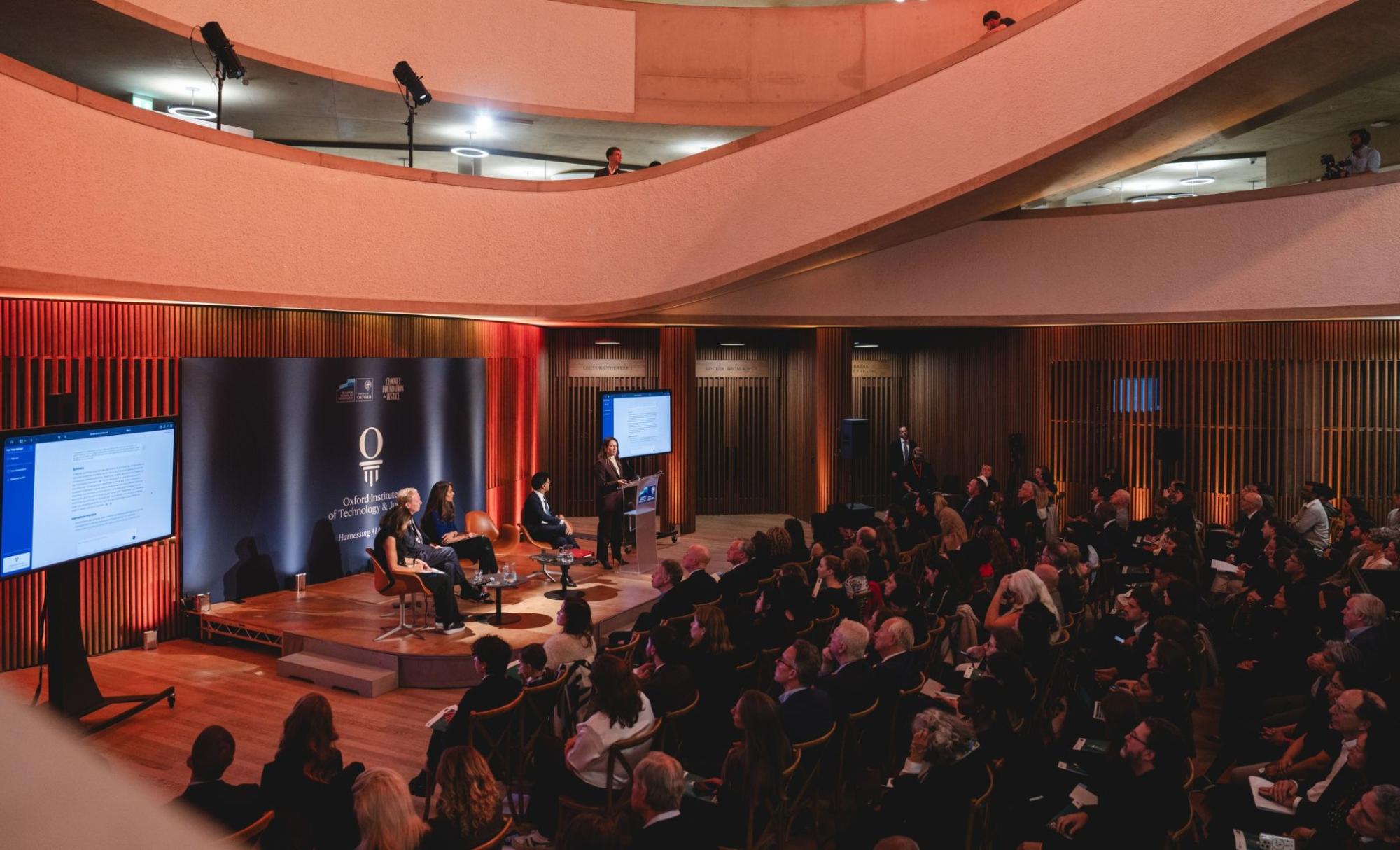
The Oxford Institute of Technology and Justice has marked its first anniversary, celebrating a year of work harnessing the potential of AI to expand access to justice while addressing the risks emerging technologies can pose to justice systems.
The Institute – a partnership between the Blavatnik School of Government and the Clooney Foundation for Justice – was established in 2025 to help close the gap between those who need justice and those who can access it.
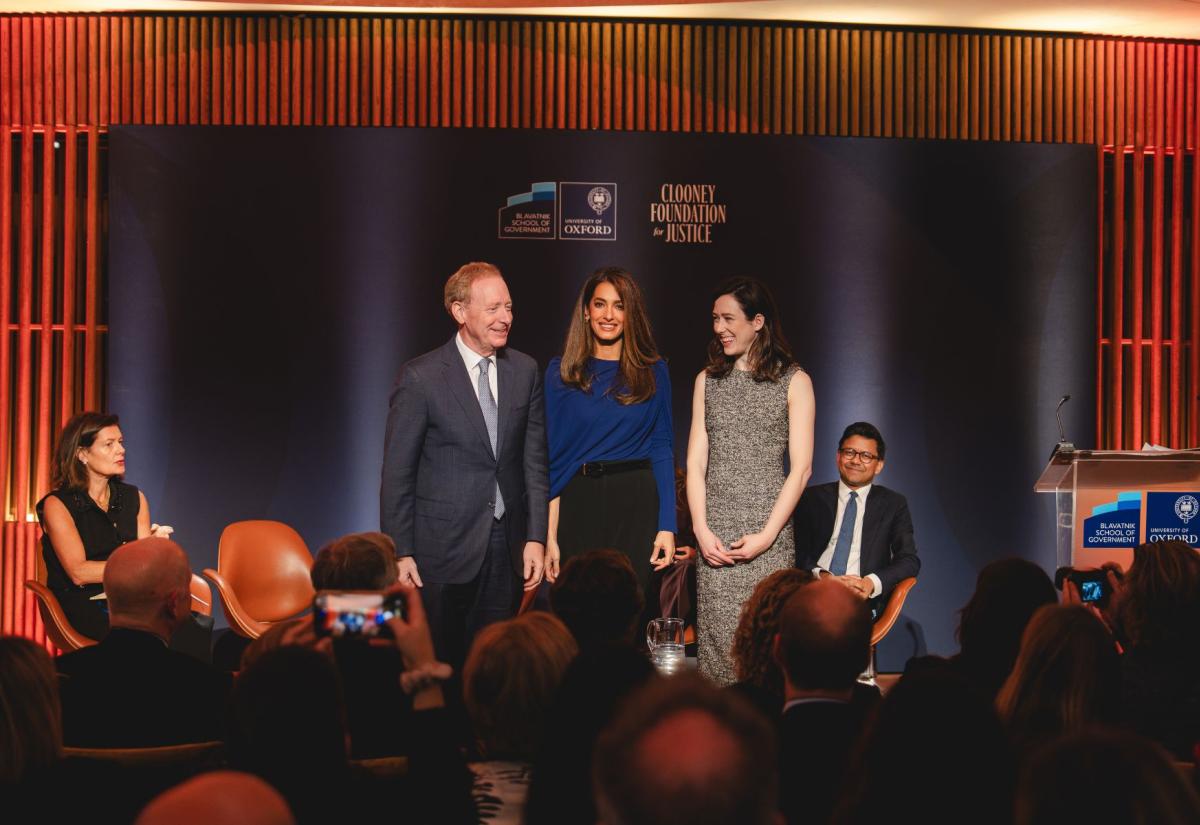
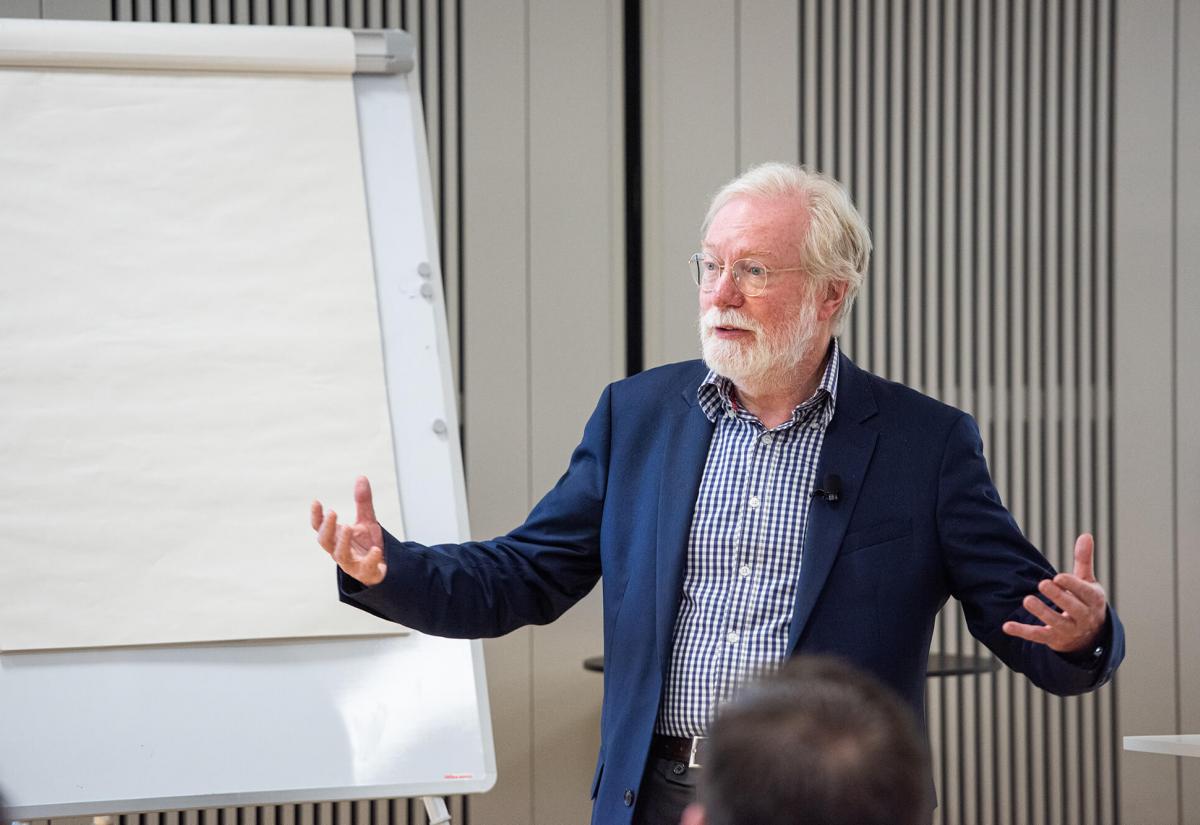
The milestone was marked at the Institute’s Tech and Justice Forum at the School, bringing together leaders from academia, technology, law and civil society. Speakers included the Chancellor of the University of Oxford, the Rt Hon Lord Hague; Professor Ngaire Woods, Dean of the School; Brad Smith, Vice Chair and President of Microsoft; Elizabeth Kelly, Head of Beneficial Deployments at Anthropic; Rt Hon Kanishka Narayan; Tonthozo Saukila from the Women Lawyers Association of Malawi and Patricia Peña-Drilon.
Co-founders Professor Philippa Webb KC and Visiting Professor Amal Clooney also reflected on the Institute’s first year and its progress across a growing portfolio of research, tools and partnerships.
A year of progress
Over the past year, the Institute’s flagship AI Justice Atlas, which tracks the use of AI in criminal justice systems, has expanded from 15 to 50 jurisdictions, providing an evidence base for judges, practitioners, academics and journalists.
The Institute has also advanced its Fair Trial Adviser, developed with support from Microsoft’s AI for Good Lab and Office of Responsible AI. The AI-powered tool is designed to provide authoritative, practical guidance on questions relating to the fairness of trials. Work is now under way to create national editions.
The Institute’s work with UNESCO has also expanded. The Massive Online Open Course on AI and the Rule of Law (MOOC), developed with UNESCO and the University of Oxford’s Saïd Business School and Faculty of Law, is now offered in English, French and Spanish, with the ambition of reaching 100,000 judges across 160 countries.
Other projects include the Global Human Rights Library, being developed with HURIDOCS to bring together thousands of decisions from international human rights bodies, and the Cyber Litigation Atlas, which maps how litigation can help turn cyber harm into accountability.
The Institute is also bringing insights from its work into executive education. Leading AI through Co-Creation, launching with its first cohort in March 2027, will equip leaders with practical frameworks for developing more effective, sustainable and responsible AI systems.
Co-creating technology for justice
Significant progress has also been made on the Institute’s Vara suite of AI tools. Hundreds of users have contributed to the co-design process, including 40 journalists across the Philippines, with more than 6,000 hours of testing completed.
Alongside the tools themselves, the Institute has begun a series of initiatives with support from Microsoft to strengthen the infrastructure needed to make them effective. These include internet-in-a-box connectivity kits, the development of the world’s first native Chichewa large language model and a gender-based violence language dataset to support an open-licensed local-language model, and technology support for the Government of Malawi’s new Gender Based Violence and Child Crimes Unit.
Looking ahead
At the Forum, the Institute announced new initiatives to support the next generation of people using technology to advance access to justice, including the Oxford Justice Innovators programme, in partnership with Microsoft and Anthropic, and a new Future Leaders Programme for University of Oxford students.
Find out more about the new programmes and read the full announcement here.