
Lead the development of AI systems with the people they affect
Why do some AI systems fail, while others deliver meaningful and lasting benefits for communities? A critical part of the answer is co-creation.
Co-creation means building AI systems with the communities they are intended to serve. It begins with the earliest decisions about which problems should be addressed, continues through the design and development process, and extends to implementation and evaluation. It is fundamentally different from consulting stakeholders only after a product or proposed solution already exists.
This executive AI leadership programme gives non-technical leaders the knowledge and practical frameworks required to lead the co-creation of more effective, sustainable and responsible AI systems from the outset. It draws on real-world lessons from the Oxford Institute of Technology and Justice, the first global initiative dedicated to harnessing the power of AI for justice.
On the programme, you will learn:
- how AI systems are built
- why co-creation can determine whether an AI initiative succeeds or fails
- how to involve communities and stakeholders in meaningful decision-making
- how to lead genuinely participatory AI development rather than extractive engagement
- how to recognise when AI is not the right solution.
We gratefully acknowledge Microsoft’s generous support for this programme.
At a glance
Applications open
Programme dates 15 - 19 March 2027
Duration6 days
LocationOxford
Cost£10,250*
WHO IS THE PROGAMME FOR?
The programme is designed for senior leaders and practitioners responsible for AI strategy, governance, development or implementation.
No technical background is required.
The programme is particularly relevant for:
- private sector executives developing and deploying AI in regulated, high-stakes or public-facing sectors
- regulators and public policy officials working in AI governance, regulation or the delivery of public goods and services
- international development officials and consultants commissioning, funding or evaluating technology interventions
- solutions architects, responsible AI practitioners, and senior programme and project managers overseeing AI system development
- humanitarian or development programme leads introducing AI into programmes that involve marginalised or underserved communities
- technology and solutions leads responsible for translating organisational needs into AI systems
- local technologists working on expanding access to public goods and services.
Participants will establish an ongoing connection with the School and become members of our executive alumni community.
PROGRAMME OVERVIEW

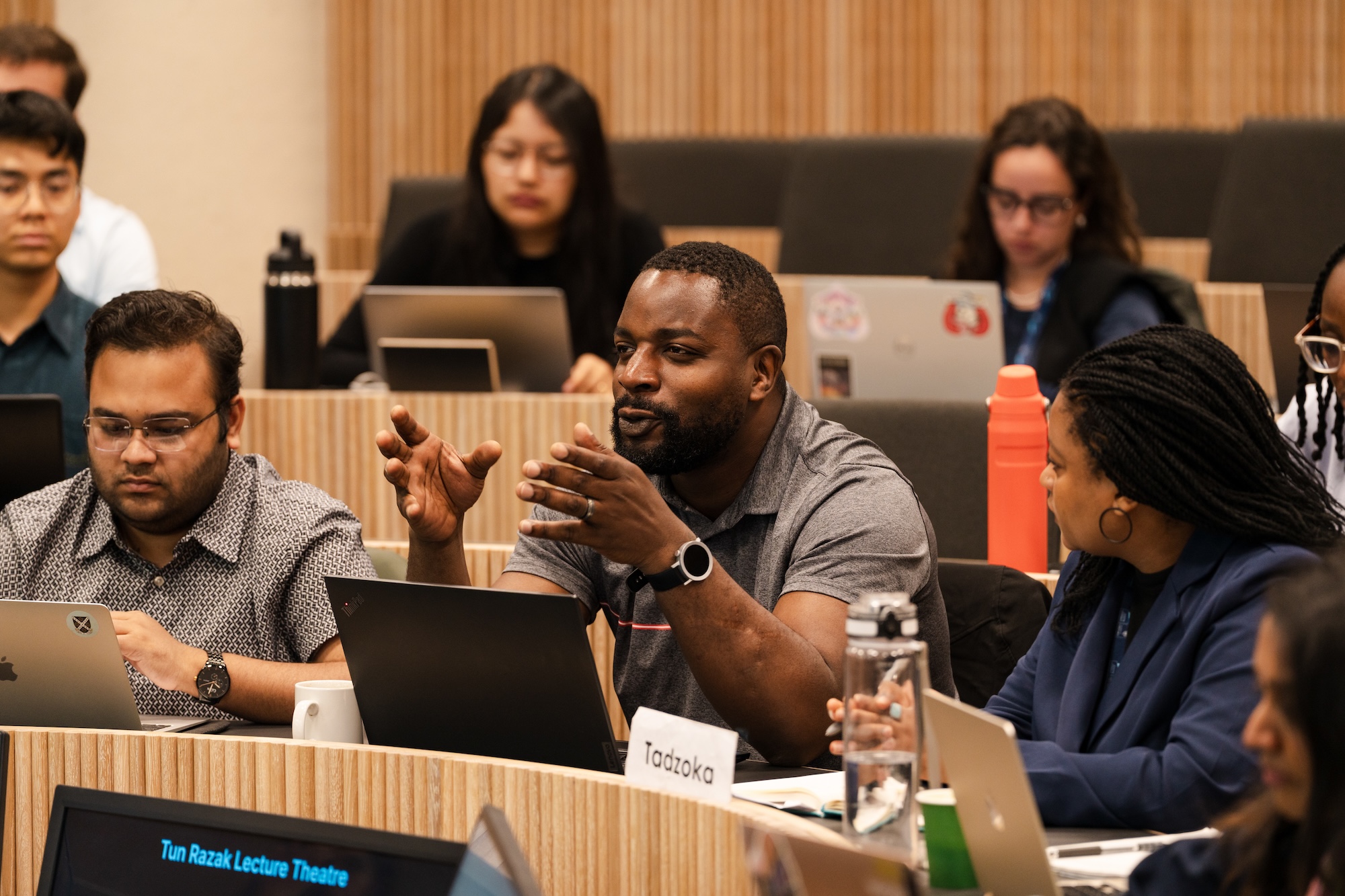
How AI systems are built
Gain a practical, non-technical understanding of how AI models, datasets and technology interventions are developed, and where the decisions that shape their purpose, performance and impact are made.
Identify which of those decisions senior leaders need to understand, question and challenge.
What is co-creation?
Define co-creation, distinguish it from adjacent approaches, and understand why those distinctions matter when developing AI systems with communities and stakeholders.
Power and extractive engagement in AI development
Analyse the difference between genuine community influence, and engagement that uses community involvement to create legitimacy without giving them meaningful authority over decisions.
Data, models, bias and harm
Understand where bias and harm can originate, how new datasets are created, and how decisions made long before deployment shape the outcomes of an AI system.
Community ownership and shared decision-making
Explore where community input needs to enter the process and how leaders can create the conditions for meaningful influence, ownership and accountability.
Learning from applied co-creation projects
Examine real-world AI co-creation projects to understand what works, what fails and which decisions matter at each stage. Case studies will include projects involving access to legal information, journalism and information as aid.
When not to build an AI system
Recognise when AI is not the right solution, how to make that case within an institution, and how to rethink, rebuild or redirect a technology intervention. Responsible AI leadership also means knowing when not to use AI.
Applying co-creation to a live organisational challenge
Apply a practical AI co-creation framework to a live challenge from your own organisation and produce a concrete roadmap to take home.
MEET THE FACULTY




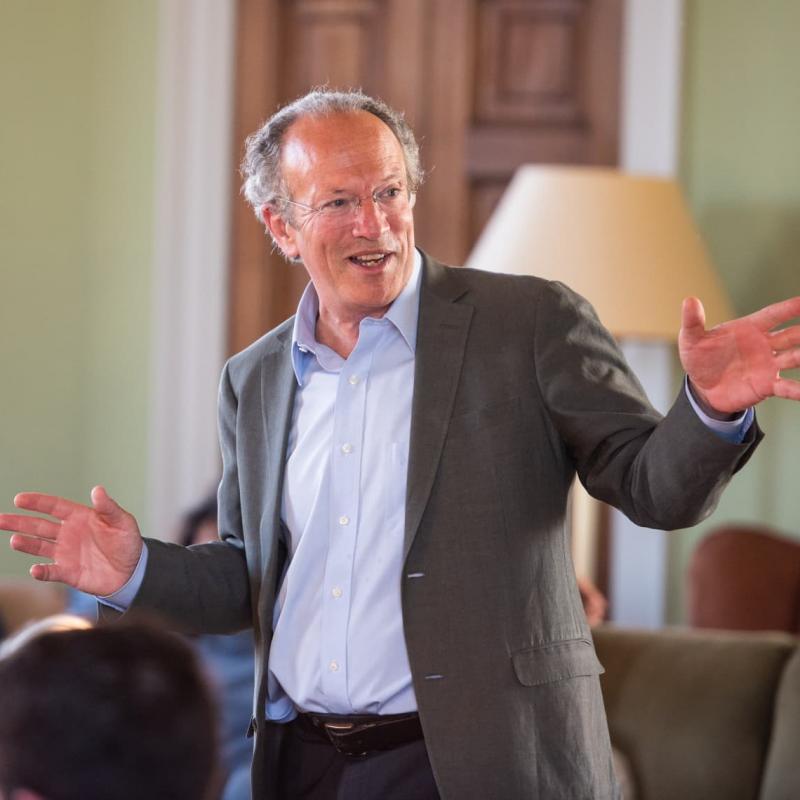

Sara Wahedi
Technology Specialist, The Oxford Institute of Technology and Justice
Paragraph title
THE OXFORD EXPERIENCE
Our programmes immerse you in the intellectual culture of Oxford, the oldest university in the English-speaking world. Its excellence and international profile rival those of any university in the world, and the University has been educating global leaders for over 800 years.
Our residential programmes, as well as our fellowships, offer opportunities to explore the city and its famous colleges. Many include walking tours of the city’s most important historical and politically relevant places, as well as formal dinners in centuries-old Oxford dining halls.
The programme combines this historic setting with a contemporary learning environment at the award-winning Blavatnik School of Government building.
When joining us in Oxford, you will be tapping into the extraordinary depth and breadth of research excellence found at Oxford University, as well as its power to convene people from all over the world. All of our executive programmes are led by members of the Blavatnik School faculty, who are leading Oxford professors and associate professors.

TAKE THE NEXT STEP
If you have any questions about the programme, please contact us at leading.ai@bsg.ox.ac.uk
Please see our terms and conditions and privacy notice.
*A limited number of scholarships are available for civil-society participants.