
Navigating Complex Decisions in Armed Conflict
Modern military operations require leaders to navigate high-stakes situations shaped by evolving operational demands and institutional constraints. Sustaining effective military cultures depends on disciplined decision-making and professional accountability.
In the Military Leadership and Judgment Programme, Oxford faculty work with combat leaders to reinforce these capabilities, helping reduce the risk of misconduct while supporting mission success. The interdisciplinary course of study, informed by philosophy, international relations, psychology, and law, prepares students to evaluate complex situations and act with clarity when the stakes are highest.
This programme:
- Develops judgment for high-stakes decision-making
- Addresses the moral, legal, and operational challenges of contemporary war-fighting
- Prepares leaders to reinforce decision standards within their teams
- Supports the development of professional cultures that sustain operational effectiveness, uphold international legal standards, and reduce misconduct risk.
The programme is tailored for senior officers and, selectively, junior leaders in strategic roles. Organisations worldwide are invited to contact our executive education team for more information about this bespoke programme, offered in partnership with military institutions. Engagements are conducted with appropriate discretion.
Teaching Method
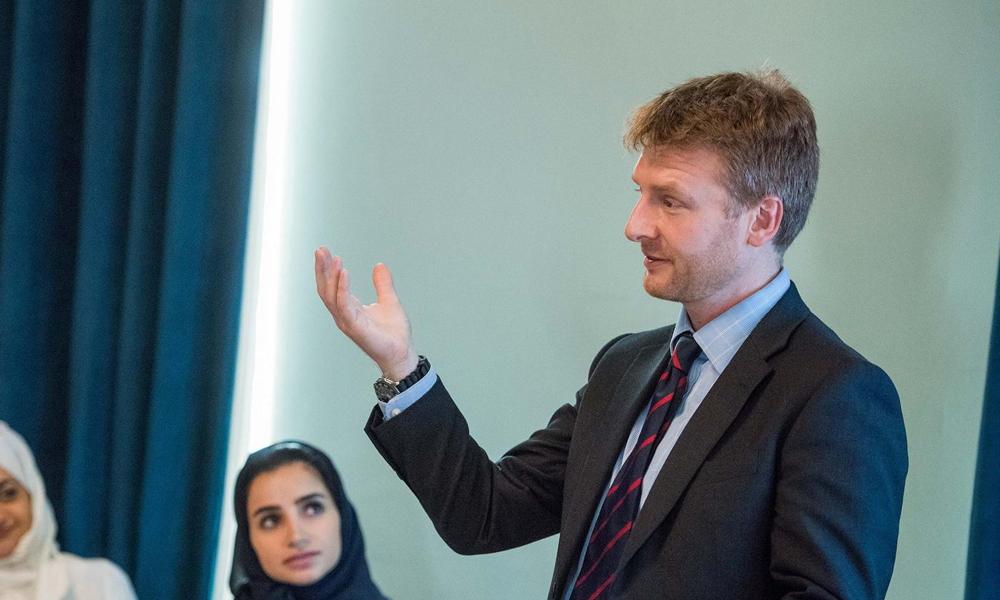
In addition to lectures and seminars delivered by Oxford scholars and practitioners, the programme makes extensive use of the case method, immersing participants in complex, real-world decision-making scenarios. This approach situates learning in an operational context and reinforces practical application. Case-based teaching strengthens critical thinking, problem-solving, and the ability to work effectively under uncertainty while maintaining high levels of engagement. Participants consistently report that this method deepens understanding and supports the transfer of learning into professional practice.
Our approach includes:
- Discussion-based sessions
- Decision-focused case studies
- Peer learning
- Structured debriefs to cultivate reflection
- Vignettes, short simulations, and formative decision exercises
- Instructor facilitation rather than prescriptive answers
- Concepts and frameworks to support ethical judgment
Programme goals & example modules
Today’s military leaders operate in challenging environments shaped by technological change, strategic competition, and the physical and cognitive demands of high-stakes operations. Effective leadership in this setting requires disciplined judgment, professional standards, and integrity in translating complexity into sound action. This programme strengthens the leadership capabilities needed to operate confidently under pressure and to align operational decisions with broader institutional and strategic objectives.
The goals of our programme:
Leadership and judgment: Strengthen leaders’ ability to make disciplined decisions under pressure, manage competing priorities, and guide teams effectively in complex operational environments with significant policy and political implications.
Professional standards and accountability: Reinforce decision discipline and standards of conduct that support operational effectiveness, reduce misconduct risk, and sustain trust within units, across the institution, and with policymakers and the public.
Organisational leadership: Develop leaders’ capacity to shape unit culture, communicate expectations clearly, and reinforce behaviours grounded in professional integrity that support consistent performance in demanding conditions and alignment with public expectations.
Decision-making under uncertainty: Build leaders’ capacity to anticipate second-order effects, evaluate emerging threats and technologies, and act decisively under ambiguous conditions.
Duty of care: Enhance leaders’ capacity to manage the human demands of operations, sustaining resilient teams, reliable performance, and conduct that reinforces public confidence.

Junior Leaders Residential Course
This is a five-day programme designed for troop commanders, focused on strengthening leadership, judgment, and decision-making in demanding operational environments. Participants examine defence activity within its wider institutional and geopolitical context, alongside the implications of emerging technologies, peer-state competition, and changing operational demands. Through intensive, case-based instruction, the course develops practical judgment and leadership discipline applicable across tactical and strategic settings. Now in its sixth year, this programme is accredited for professional development pathways for UK service personnel.
Senior Leaders Residential Course
Over two intensive days, this course strengthens leadership and decision-making capabilities for mid-level commanders operating in complex environments, reinforcing professional standards and disciplined execution at the unit level. Participants develop practical judgment, preparing them to manage tactical challenges and lead effectively across a range of operational settings. The programme sharpens leadership skills and supports sustained professional growth, enabling leaders to influence unit performance and culture. This focused instruction positions participants to translate sound judgment into effective action within their commands and the wider defence environment.
Psychological Factors Influencing Defence and Security
In high-pressure defense and security environments, decision-making is often far from straightforward. This module explores the psychological factors that influence judgment and action in military contexts. Participants learn strategies to maintain cognitive clarity and mitigate biases, enabling sound decisions under stress. They also learn how to leverage psychological factors to improve team performance, leadership effectiveness, and operational outcomes.
Negotiations
Effective leadership in defence and security often requires navigating complex negotiations across organisational, political, and international boundaries. This module refreshes core negotiation concepts and introduces advanced tactics for managing multi-party, multi-issue discussions. Using a single immersive simulation, participants learn analytical tools for mapping interests, managing coalitions, and steering deliberations under pressure. They also develop practical skills for overcoming impasses, working with diverse stakeholders, and achieving durable agreements in high-stakes environments.
Foreign Policy Decision-Making
In defence and security environments, leaders routinely make decisions under pressure and uncertainty. This session introduces the core tenets of rational choice, a leading framework for understanding how individuals make decisions, and examines real-world cases of the use of force where outcomes diverge from theoretical predictions. Participants explore how cognitive shortcuts, emotions, ideology, group dynamics, and bureaucratic processes shape foreign policy and operational judgment. The module equips leaders with a clearer understanding of how decisions are formed, strengthening their ability to anticipate behaviour and act effectively in complex, high-stakes situations.


Associated faculty and researchers


Sven Altenberger
Walter Benjamin Postdoctoral Research Fellow, University of Oxford
Study Days
Study Days offer dedicated, single-day sessions for military personnel to examine new technologies, regional trends, and other areas of emerging professional importance, led by a panel of four to six experts. These events foster reflective learning and open discussion, creating a productive environment for exploring contested questions in a neutral academic setting. They help build connections between academia and the military, support cross-unit and cross-service networking, and offer opportunities to test assumptions and refine strategic thinking. Each Study Day concludes with a networking dinner to strengthen professional relationships and shared understanding across ranks and roles.
Visiting Fellowships
The MLJP Fellowship offers military and public-service leaders a distinctive opportunity for focused study and reflection at the Blavatnik School of Government, supporting independent research and professional development. Fellows pursue a self-directed topic while working closely with Oxford faculty to refine their thinking, writing, and practical application. The programme combines personalised mentorship with access to the School’s academic community, policy engagement, and University resources. Each Fellow develops a capstone project suited to their objectives, ranging from written scholarship to practitioner-focused workshops. Organisations or individuals interested in learning more are invited to contact the MLJP team to discuss programme design and availability.
Bespoke Instruction
Faculty deliver tailored onsite instruction for military organisations on a case-by-case basis. These programmes support senior and junior leaders, non-commissioned officers, and new personnel in strengthening professional judgment, leadership standards, and decision-making in demanding operational contexts. Instruction is delivered through structured case studies, guided discussion, and practical scenario analysis designed for real-world application. Units interested in bespoke delivery are invited to contact the MLJP executive education team to discuss availability and requirements.
Leadership and Judgment on the Modern Battlefield:
-
Where operations meets policy
Leaders in strategic units operate closer to unfolding events than formal policymaking centres, yet their actions, observations, and reporting shape how policymakers and the public interpret emerging realities. Junior and mid-level leaders serve as the organisation’s frontline observers, identifying patterns, risks, and opportunities that may not yet be visible at higher echelons. Their decisions influence how risks are assessed, how priorities are set, and how policy adapts to support strategic objectives. In modern defence environments shaped by evolving international law, technological change, and political expectations, this operational–policy interface plays a critical role in ensuring that strategic action remains responsive to broader institutional and public expectations.
-
Why operational judgment matters
Decisions made at the tactical and operational levels frequently generate consequences that extend well beyond their immediate context. Judgment exercised under pressure and ambiguity shapes escalation pathways, organisational effectiveness, and public trust. Junior and mid-level officers and noncommissioned leaders form the leadership pipeline, meaning the standards they develop early propagate throughout the force. Strengthening judgment at these levels directly safeguards these institutional and operational outcomes, improving command reliability and force performance.
-
Leadership in complex environments
Operating effectively on the modern battlefield demands more than technical proficiency. Leaders must balance competing priorities, adapt to emerging legal and institutional constraints, and manage the pressures and expectations associated with the responsible exercise of force. They must anticipate second-order effects, recognise emerging threats and mission demands, translate complex information into disciplined action, and communicate critical insight upward so senior leaders can make informed strategic and policy decisions. These capabilities support sound decision-making in uncertain, high-stakes contexts while reinforcing the professional standards that ensure operational actions align with broader strategic intent and public expectations.
-
How the programme delivers
Participants in the programme develop the leadership and judgment required for this operational–strategic environment by examining defence decision-making within wider institutional settings and working through realistic operational scenarios. A typical day addresses issues central to modern military leadership, including public perspectives on the use of force, the risks and potential of emerging defence technologies, and applied exercises designed to strengthen professional judgment. Through case-based learning and guided discussion, the programme builds the analytical habits and leadership discipline needed to operate effectively in complex, high-stakes contexts.
Get in touch
Please get in touch with our team for more details about this bespoke programme. Email mljp@bsg.ox.ac.uk