
From policy design to implementation: lessons from my placement in Tanzania
Atsuya Ito, 2025 Master of Public Policy alumnus, reflects on his policy placement in Tanzania and what it taught him about the challenges of turning policy design into effective implementation. The Policy Report is the final compulsory assessed component of the MPP, which gives students the opportunity to apply their learning to a real-world policy challenge.
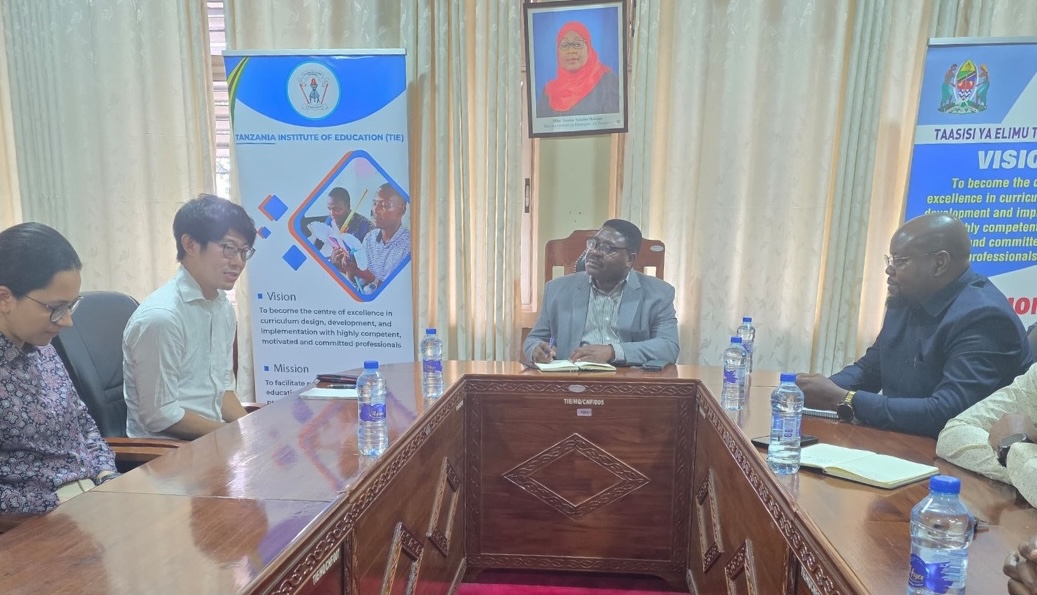
Having worked on education policy in Japan, my policy report placement as an Oxford Master of Public Policy student offered me a chance to view a different side to the policy process: implementation. Based in Tanzania working on teacher professional development, I found myself rethinking what lies between designing a policy and translating it into practice.
Finding the placement
I secured a placement with the Tanzania Institute of Education (TIE) through the What Works Hub for Global Education (WWHGE). I began thinking about the policy placement around the start of the MPP programme. I had three main criteria in mind: (1) engaging with education policy, an area of personal interest; (2) gaining experience in a context outside of Japan or the UK, where I could encounter diverse values and learn new things; and (3) gaining experience closer to implementation, such as in local government, schools or NGOs, expanding my focus beyond national government.
I was already familiar with WWHGE through my academic supervisor, Noam Angrist, its Academic Director. After attending a WWHGE workshop, I learned about placement opportunities through its network of Policy Fellows and eventually applied for a project in Tanzania that closely matched my interests.
Supporting teacher professional development in Tanzania
My work involved supporting the effective implementation of teacher continuous professional development in Tanzania, known by its Swahili acronym MEWAKA, and focused on three main pillars.
The first was supporting the design of a proposed teacher coaching system. MEWAKA already included school-based professional development and a national e-learning platform. However, the government was exploring ways to maximise the impact of these activities by incorporating coaching through regular classroom observation and feedback. I assisted in drafting a concept note to build consensus and engage relevant stakeholders in this initiative.
The second involved evaluating potential digital tools to support the effective implementation of the coaching system. I explored existing models and consulted service providers and government technical teams, considering functionality alongside government ownership, financial and technical capacity, and sustainability.
The third was understanding the realities of policy implementation and feeding those insights back into the policy and project discussions. I spoke with local government officials about implementation challenges, shared these field-level perspectives with WWHGE and other stakeholders, and helped connect relevant actors. This work also aligned with my Policy Report, which addresses the role of the ‘middle tier’ in adaptive implementation.
What I learned in Tanzania
One key lesson I learned is that policies do not automatically get implemented. Although MEWAKA was set out in policy documents, translating it into actual school-level practice involved multiple levels of government, spanning the national, regional, district, ward and school levels. Implementation is shaped by factors such as capacity, resources, coordination and local conditions at each level, as well as the complex interactions between them. This experience reinforced the importance of considering implementation from the design phase.
This experience also deepened my understanding of the concepts covered in an MPP option module ‘What Works to Improve Education in Low- and Middle-Income Countries’, which I took during Trinity Term. In class, I learned about the gap between education policy and actual practice, as well as how the effectiveness of a given intervention can vary significantly depending on how it is implemented. While I had understood ‘implementation matters’ theoretically, my experience in Tanzania gave me a more concrete grasp of just how challenging effective implementation is in practice. With limited resources and capacity, we must determine what to maintain and what to adapt to the local context in order to achieve more effective implementation.
I also recognised that listening to the voices of those who actually implement policies is essential to understanding what makes implementation difficult. The conversations in the field revealed that the conditions schools face, such as teacher shortages, distance, and transportation issues, vary significantly, necessitating responses tailored to local circumstances. Establishing common standards and allowing for flexibility at the local level are not mutually exclusive. Rather, it is important to clearly define shared goals while adjusting implementation methods and support to reflect the circumstances of each region or school. To achieve this, it is crucial to have a functioning feedback loop that captures challenges and lessons learned on the ground and translates them into improvements in implementation.
Another personal takeaway was learning how to exercise leadership without formal authority. Unlike a conventional internship with a fixed job description, the placement evolved as I learned about the context and identified where I could contribute. Approaching the placement from this position taught me that exercising leadership requires understanding what others need, demonstrating what I can offer and contribute, and building relationships based on trust.
Taking the lessons forward
Through this placement, I came to appreciate the importance of considering implementation from the outset: who will implement a policy, how challenges and lessons from the ground will be captured, and how they will inform future improvements. As society changes and policy challenges become increasingly complex and diverse, it is becoming ever more vital to move beyond a ‘create-and-that’s-it’ approach and instead pursue policies that are continuously updated through learning from implementation. This is a perspective I intend to carry with me when I return to Japan.
My six weeks in Tanzania did not give me a definitive 'answer' to policy challenges. Rather, they allowed me to rethink the fundamental questions we must keep asking to ensure policies actually function effectively.
Finally, I would like to express my sincere gratitude to Rebecca Trupin and Manzer from WWHGE, as well as WWHGE Tanzania Policy Fellows Joel Justine Mhoja, Doreen Christopher Samuel, and Lawrence J. Sanga, for generously sharing their time and insights throughout this placement. I also wish to thank Noam for guiding the Policy Report, and everyone at TIE, Prime Minister’s Office-Regional Administration and Local Government (PMO-RALG), Ministry of Education, Science and Technology (MoEST), gui2de team from Georgetown University, and WWHGE for warmly welcoming me and engaging in discussions with me.