Billionaires and powerful corporations often dominate policymaking – until scandal disrupts the equilibrium.
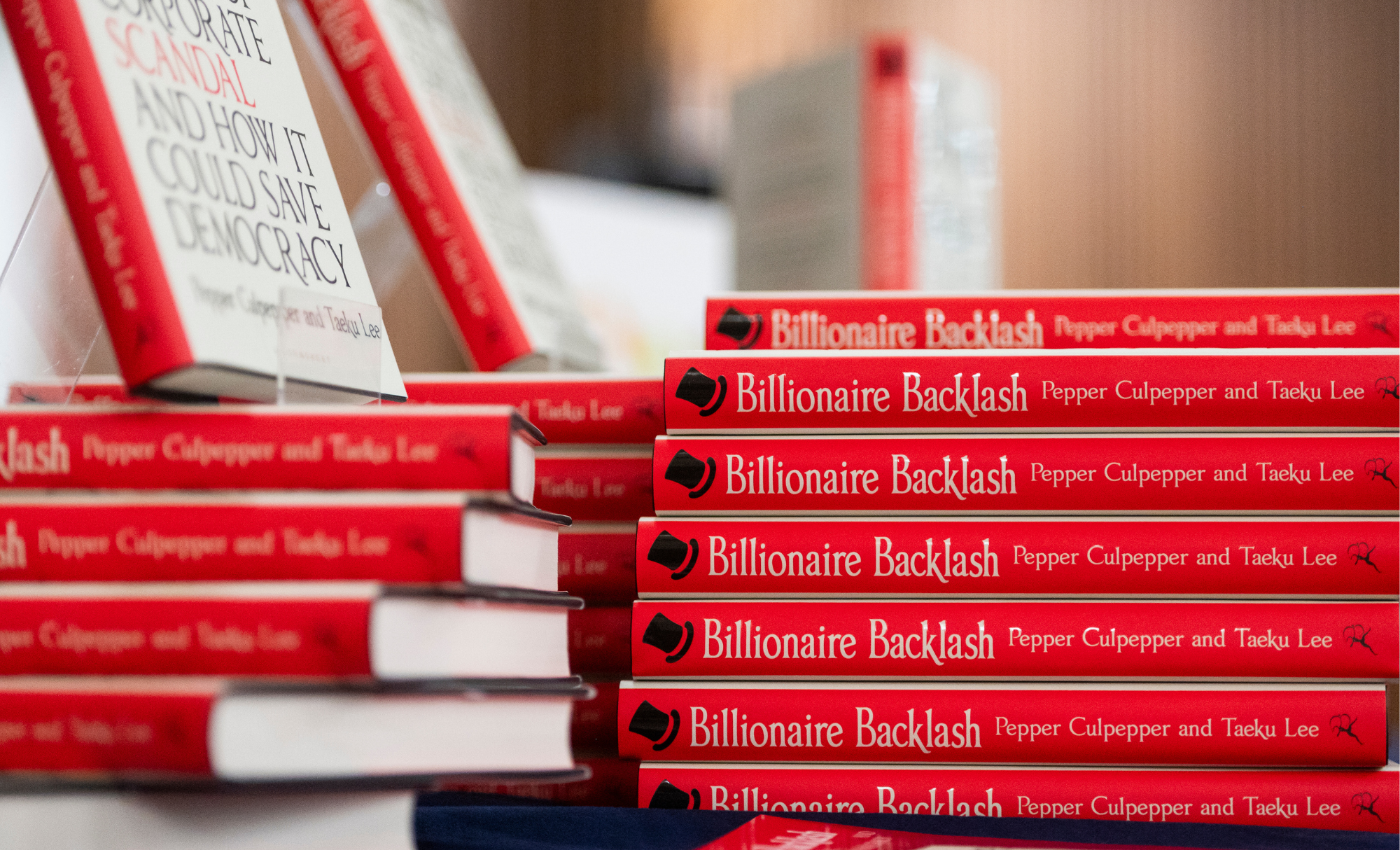
In their new book Billionaire Backlash: The Age of Corporate Scandal and How it Could Save Democracy, Blavatnik’s Vice Dean Professor Pepper Culpepper and Professor Taeku Lee of Harvard University argue that the shared anger that follows major corporate scandals can be channelled into a backlash with the potential to reinvigorate failing democracies.
Drawing on real-life examples – including the French powdered milk scandal, Samsung in South Korea, Goldman Sachs in the United States and Cambridge Analytica in Britain – Culpepper and Lee show how corporate scandals can become opportunities for real political change.
One case examined in the book is the 2015 Volkswagen ‘Dieselgate’ scandal, which exposed Volkswagen’s deliberate use of defeat devices in violation of the Clean Air Act, leading to billions in fines, criminal prosecutions and renewed scrutiny of emissions regulation.
In a review for the Financial Times, Andrew Hill wrote:
“It is a singular achievement of this well-timed, tightly written book that it ends on an optimistic note about democracy and ‘good populism’, when corporate-backed ‘bad populist’ autocracies seem to be in the ascendant”.
Billionaire Backlash: The Age of Corporate Scandal and How it Could Save Democracy is published today by Bloomsbury Publishing.
Recent news