How much is a life worth?
A virtual seminar with Tom Simpson
Registration for this event is now closed.
How should our societies respond to the threat posed by the novel coronavirus? There is no explanation needed to explain why we should save lives, and the various lockdowns imposed by governments are an attempt to do just this. But lockdowns come at great cost, in economic terms directly. Their costs also come in other terms, both direct and indirect, not least in terms of health and life expectancy. Indeed, some have compared the lockdown restrictions to a ‘nuclear social bomb’.
Some political leaders are at pains to persuade us that their decisions are guided by science, but what are the moral and ethical calculations hiding behind the scientific curtain? When we balance competing concerns, are all lives weighed the same? Are real lives in the balance at all, or is it just the perception that leaders are saving lives that matters? Is there any principled way of weighing what is at stake, and what difference does it make what other countries are doing? Who should be making these decisions? This online, interactive seminar explores these and other ethical questions lurking behind the science.
Supplementary reading and a brief video for this seminar will be made available to registered participants beforehand.
If you have any questions, please contact Harriet Konishi in the Executive Education Team, Blavatnik School of Government, at harriet.konishi@bsg.ox.ac.uk.
Please register for this event by Thursday 2 July. Once registered, you will receive an email with a link to join the event via Zoom.
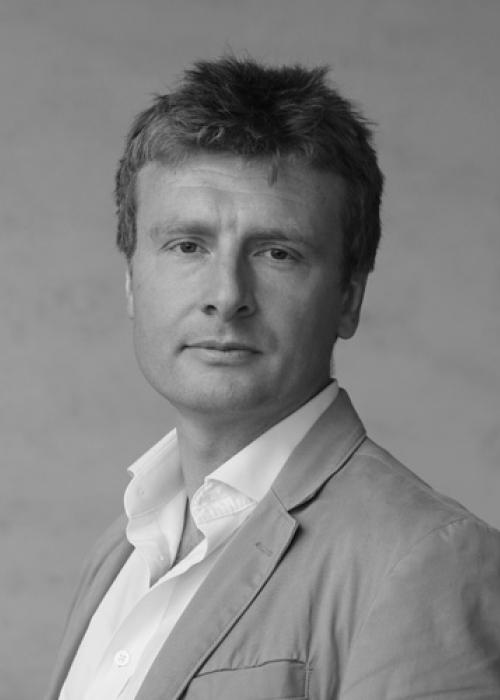
Tom Simpson is Associate Professor of Philosophy and Public Policy at the Blavatnik School, and a Senior Research Fellow at Wadham College. He was educated at Cambridge (BA, MPhil, PhD), where he was also previously a Research Fellow at Sidney Sussex College. Between degrees he served as an officer with the Royal Marines Commandos, with tours in Northern Ireland, Iraq and Afghanistan. His research focuses on a variety of issues in moral and political philosophy, especially on trust, issues at the intersection of technology and security, and on the nature of freedom. He co-edited a collection of essays, The Philosophy of Trust (Oxford University Press, 2017), and is concluding his first monograph, Trust.