Building an effective civil service is crucial for public service delivery and good governance, but reforming bureaucratic institutions is notoriously difficult.
Join Martin Williams, Associate Professor of Organisational Studies and Associate Professor (by courtesy) of Political Science and Public Policy at the University of Michigan, in conversation with Ngaire Woods, Dean of the Blavatnik School of Government, to discuss his new book Reform as Process: Implementing Change in Public Bureaucracies.
The talk will be followed by a drinks reception.
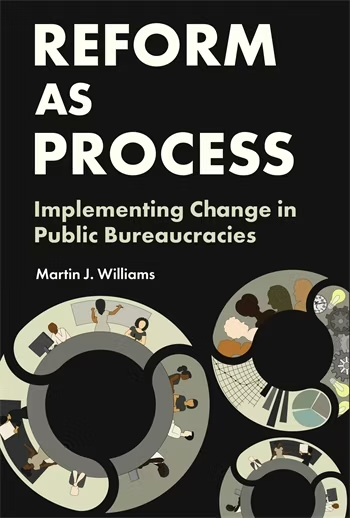
In Reform as Process, Martin Williams examines over one hundred civil service reforms across six African countries, showing why most fell short of achieving lasting organisational change. Some did yield positive changes, however, when they were able to create opportunities for civil servants to discuss performance and how to improve it. Drawing on this evidence, Williams develops a new theory of how systemic reforms can lead to meaningful change—not by trying to force it through top-down interventions but by catalyzing an ongoing and decentralized process of continuous improvement.
Reform as Process makes theoretical and empirical contributions to research on organisational performance, civil service reform, and public service delivery, and it shares practical insights and strategies to help reformers around the world achieve meaningful change in their organisations.
Martin J Williams
Martin Williams is an Associate Professor of Organisational Studies and Associate Professor (by courtesy) of Political Science at the University of Michigan. He is also Associate Faculty at the Blavatnik School of Government, University of Oxford, and an Associate Fellow at Green Templeton College.
Martin’s research is on the politics and management of policy implementation, public service delivery, and bureaucratic reform. He also researches the challenges of causal inference, external validity, and applying evidence in government decision-making.