

Why Australia’s Governor-General is right about kindness and care
Corey Blyth (MPP 2025) argues that amid rising distrust and polarisation, the Governor-General of Australia’s call for kindness and care in politics and broader society more important now than ever.
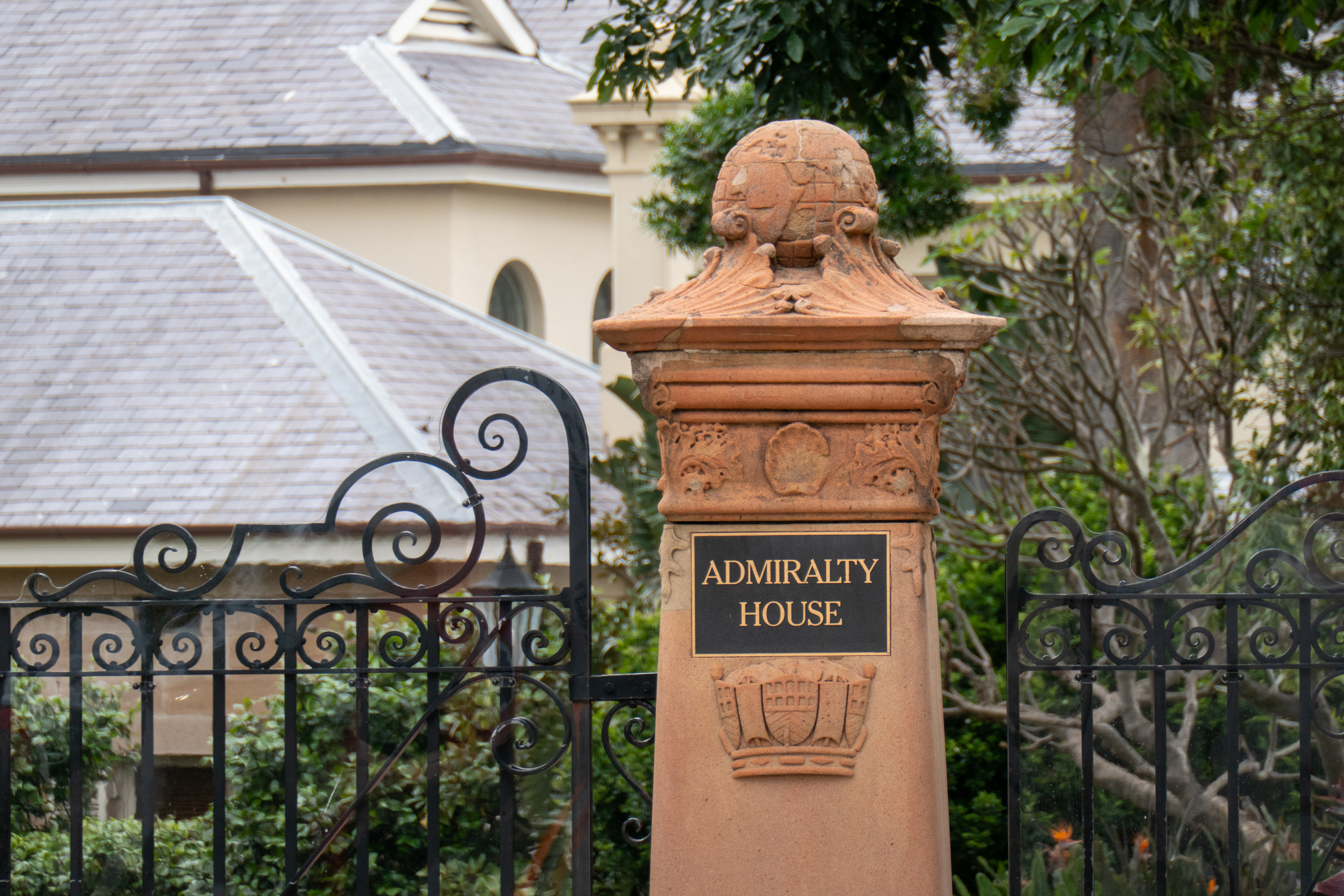
Sam Mostyn AC was sworn in as Governor-General of Australia on 1 July 2024. Since then, Her Excellency has consistently promoted the need for a “culture of care” – an “unstinting focus on kindness, on care and on respect” – in politics and broader society. This strikingly simple message is more important now than ever.
In June 2025, Ipsos polling reported that the majority of Australians believe that “the political and economic elite don’t care about hard working people” (65%), that “traditional parties and politicians don’t care about people like me” (60%), and that a “strong leader” is needed “to take the country back from the rich and powerful” (69%). A “crisis of grievance” is also emerging.
These figures are not markedly inconsistent with recent history but nonetheless reveal two enduring themes that warrant attention: many Australians feel that politics is not driven by a sense of care, and Australians want a strong leader. The Governor-General’s messaging is relevant to both.
Kindness in politics
Kindness and care are not typically regarded as synonymous with politics. The political environment can cause kindness to be conceived as an illusory aspiration, which should not be so.
Kindness is defined as being “possessed by goodwill so much that it is neither reason nor rationality that guides our actions, but goodness toward the other”. Characteristics that Australians regard as exhibiting kindness include “assuming others have good intentions, caring for those doing it tough, [and] being aware of our impact on others”. Kindness is thus linked to care and requires doing good for the sake of doing good, irrespective of whether reward or detriment may follow.
As defined in these terms, kindness should inform how leaders engage with one another. Deteriorating civility in political discourse has emerged as a particular concern in Australia and elsewhere, with trust in Australian politics declining. Australians are noticing incivility and are aggrieved by it – 61% of Australians described civility and mutual respect in 2023 as being the worst they had ever seen.
Social media is partly to blame, given that provocative commentary or debate can be easily published and rewarded with engagement. But so too is the decision by some leaders to exploit deliberative political structures as a platform through which to ventilate personal or incendiary rhetoric.
Kindness means rejecting the temptation to humiliate or denigrate others for a cheap win and to instead appeal to a more restrained political environment – “not the total absence of hostility or escalation, but avoiding those extremes unless truly necessary”. As the Governor-General recently explained: “we need to rediscover something Australians have always known how to do: to disagree well. To wrestle with the idea, not the person proposing it”. If leaders do not live up to those basic standards, the onus ultimately falls on voters to find and support those who do.
Care for institutions
Australians must be kinder to our democratic institutions and care for them. The modern “age of outrage” is a bleak one that is often preoccupied with problems, encouraging an atmosphere of perpetual aggrievement and cynicism. That cynicism undermines confidence, and risks leaving the institutions that have overwhelmingly served Australia well – and which rank excellently by global standards – including an independent judiciary, strong constitutional democracy and relatively open government – vulnerable to external threats and decline.
Critiquing and improving our institutions is a good and necessary aspect of Australian democracy, but the risk of focusing heavily on fixing what does not work is taking for granted what does. The Governor-General instead suggests that Australians should respect “each other, our continent and our institutions every day” in what is a refreshingly optimistic message that encourages Australians to appreciate and take stock of the good that already exists – and defend it.
One practical policy response is to redouble efforts to improve school students’ (currently poor) understanding of Australian democratic institutions through compulsory civics education – it is hard to care for what is not understood.
If leaders resist incivility and the opprobrium so often directed towards Australian institutions is somewhat tempered, Australians might just feel like their politics is doing a better job at caring.
Kindness as a strength
Australians want a strong leader to represent their interests, but must not be mistaken into believing that kindness and strength cannot coexist. Those traits are not mutually exclusive and are not incompatible with ambition – “kind does not mean weak”. Genuine kindness earns respect and fosters humility, which in turn permits influence.
Jacinda Ardern – the former Prime Minister of New Zealand – has emphasised empathy in leadership which, though distinct from kindness, reinforces the idea that leadership is not a top-down or inhuman affair. Whilst her time as leader was not without problem, her rhetoric was certainly less sharp than that exhibited by some leaders today. Prime Minister Albanese has also sought to found his prime ministership upon a politics of kindness, though the extent to which the current political environment is conducive to that approach is certainly questionable.
Kindness is “the hallmark of people led leadership”. President Franklin Roosevelt opined that it has “never weakened the stamina or softened the fib[re] of a free people”. But if we want to encourage kindness amongst leaders, as the Governor-General suggests, we must reward those who exhibit it and not passively permit unkind rhetoric to fester.
The Governor-General occupies a unique apolitical position that cannot make policies or spend budgets, but can influence messaging and tone. Her steady messaging on kindness and care hits the mark by communicating the vital need to preserve civil discourse, care for Australian institutions, and appreciate kindness as a symbol of leadership strength, at a time of growing disillusionment, when each is under strain.
These messages carry weight. But above all, they remind Australians that, irrespective of who we are, what we do and what we want to achieve, we all have one inalienable duty – to be a decent person.