

What Brazilian favelas can teach the world about governance and resilience
Master of Public Policy student Valter Manuel Gomes Neto draws on lived experience and policy practice to show how Brazilian favelas offer lessons on governance beyond the state.
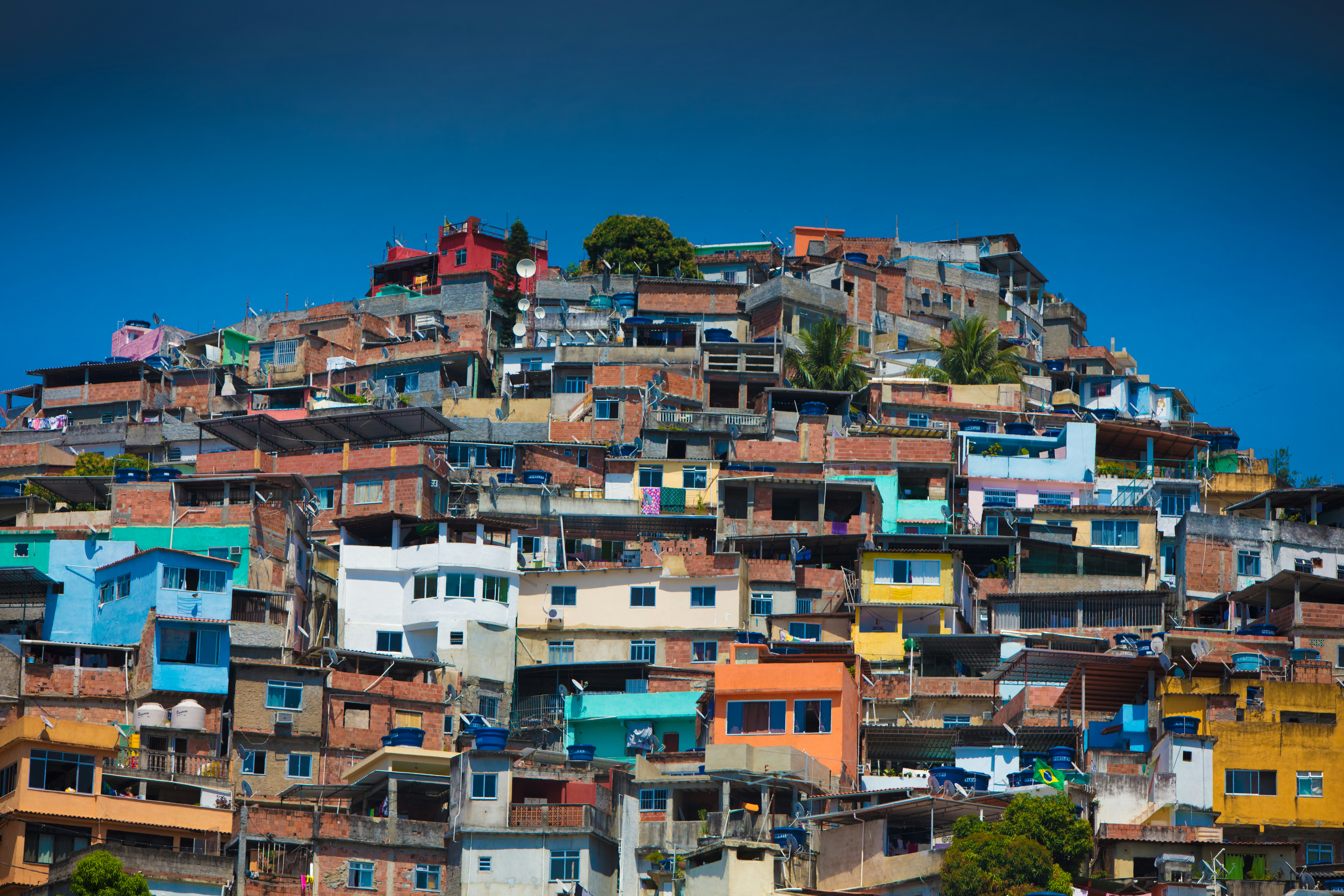
In public policy debates, favelas usually appear as spaces defined by deprivation. They are described through poverty, informality, violence and the absence of the state. In Brazil alone, more than 16 million people live in informal settlements, while globally more than one billion people do so. Despite the scale of these territories, they are rarely discussed as places of effective governance.
Growing up in a favela, I did not experience governance as something confined to formal institutions. Governance emerged when neighbours organised to address concrete problems, such as access to services, conflicts over shared space, and risks from floods and poor infrastructure. These forms of organisation usually arose in fact because the state was absent or ineffective. Even without formal authority, they performed basic governance functions, including prioritising needs, coordinating action and creating accountability within the community.
This gap between how governance works in practice and how it is understood in policy frameworks matters. When favelas are treated solely as spaces of vulnerability, policies tend to focus on short-term assistance and emergency responses. This approach ignores the fact that collective organisation already exists in these territories. As a result, communities are rarely engaged as political actors, reinforcing the distance between institutions and residents that created the problem in the first place.
Community-led governance as a response to state failure
Governance is often associated with formal institutions such as ministries, councils, and legislatures. However, research on urban informality shows that when state presence is fragmented or inconsistent, communities develop their own mechanisms to manage shared problems. Both the World Bank and UN-Habitat document how resident associations and informal leadership structures play a central role in organising access to services and representing collective interests in informal settlements.
In the communities where I grew up and later worked, collective decision-making was not an abstract ideal. It was part of everyday life. Residents gathered to discuss problems related to education, public space and environmental risks, often because there were no formal consultation channels available. These processes were informal but not chaotic. They relied on trust, shared responsibility and knowledge built through lived experience. These elements are often ignored in formal policy design, even though they are essential for successful implementation.
When communities are supported to engage with public institutions, these existing practices do not disappear. Instead, they become more structured and more visible. Access to information about public budgets, policy processes and accountability tools helps residents articulate demands more clearly and monitor public action more effectively. Community-led governance should not be seen as an alternative to the state. When it is ignored, policymaking becomes less inclusive and less effective.
From participation to concrete outcomes in urban infrastructure
Community participation is often treated as a consultative step rather than as a real decision-making process. My experience working with TECHO – a non-profit organisation that works alongside residents of informal settlements to deliver community-led housing and urban infrastructure projects – challenged this assumption. As an operations manager in Minas Gerais, I worked with residents to define priorities, allocate resources, and evaluate urban infrastructure projects within their communities.
Decisions were taken collectively by the community, with volunteers acting as facilitators between residents, technical teams and partner organisations. Projects were not predefined. Instead, they emerged from participatory planning processes based on residents' identified most urgent needs. People living in these territories understand the daily risks and constraints better than external actors, making their leadership essential to effective interventions.
This work resulted in the construction of more than 27 community-led infrastructure projects, including stairways to improve mobility and safety, shared community spaces, urban gardens, and drinking water points. While these projects were modest in scale, they addressed concrete barriers related to access, safety, and collective use of space. Research on community-driven development shows that projects designed in this way are more likely to be sustainable and better maintained over time. Crucially, residents participation in these projects was not symbolic. Residents were decision-makers, helping to ensure that infrastructure interventions were better aligned with local realities and more likely to be maintained over time.
When the state listens, collaboration across sectors
Community-led initiatives alone cannot address structural inequality; their impact depends on how public institutions respond to them. In my experience working with community-based organisations such as Gerando Falcões – a social organisation that acts as an intermediary between favela communities and government institutions – illustrates this dynamic. These organisations often translate lived experience into policy language while supporting communities to navigate bureaucratic processes.
This intermediary role is particularly important in areas such as housing and urban development, where policy design often fails to reflect local conditions. Evidence from the World Bank shows that collaborative governance arrangements improve service delivery outcomes when communities are involved in implementation and monitoring. UN-Habitat similarly highlights the role of inclusive urban governance in strengthening accountability in informal settlements.
Such collaborations are not free of tension. Governments operate under political and fiscal constraints, while communities prioritise urgency and lived need. Yet when institutional spaces are deliberately opened, policies tend to become more adaptive and implementation gaps are reduced. Inclusive governance requires more than consultation. It requires institutions to recognise community actors as legitimate political partners and to share power in practice.
Why these lessons extend beyond Brazil
The relevance of these experiences goes beyond Brazilian favelas. Informal settlements house more than one billion people worldwide, and cities across the Global South and the Global North face increasing challenges related to housing affordability, service access, and climate vulnerability.
While these contexts differ, they raise similar governance questions. How can institutions engage communities meaningfully? How can local knowledge inform policy design? And how can trust be rebuilt where institutions are perceived as distant or ineffective?
The experiences of Brazilian favelas show that governance does not require ideal institutional conditions to emerge. It develops through collective action and practical problem-solving.
From vulnerability to political agency
Brazilian favelas demonstrate that effective governance does not have to begin with ideal institutional design, but with recognising how collective action already operates in practice. When policymakers treat informal settlements solely as spaces of vulnerability, they overlook existing forms of organisation that shape how policies are received, adapted and sustained.
For policymakers, this calls for a shift away from symbolic participation towards meaningful power-sharing. Inclusive governance depends on engaging communities not only as beneficiaries, but as political actors with knowledge, priorities and decision-making capacity. Policies that fail to do so risk reinforcing the institutional distance they seek to address.
As cities worldwide confront growing challenges related to inequality, informality and climate risk, the lessons from Brazilian favelas are increasingly relevant. Learning from these contexts does not mean replacing the state, but rethinking how institutions listen, collaborate and govern in practice.