

“WAR IS PEACE”: the United States, Israel, Iran and peace through strength
Jackson Sandler-Bussey (MPP 2025) examines how the United States’ strategy of “Peace Through Strength” is changing the global diplomatic landscape, as the US and Israel continue their strikes on Iran.
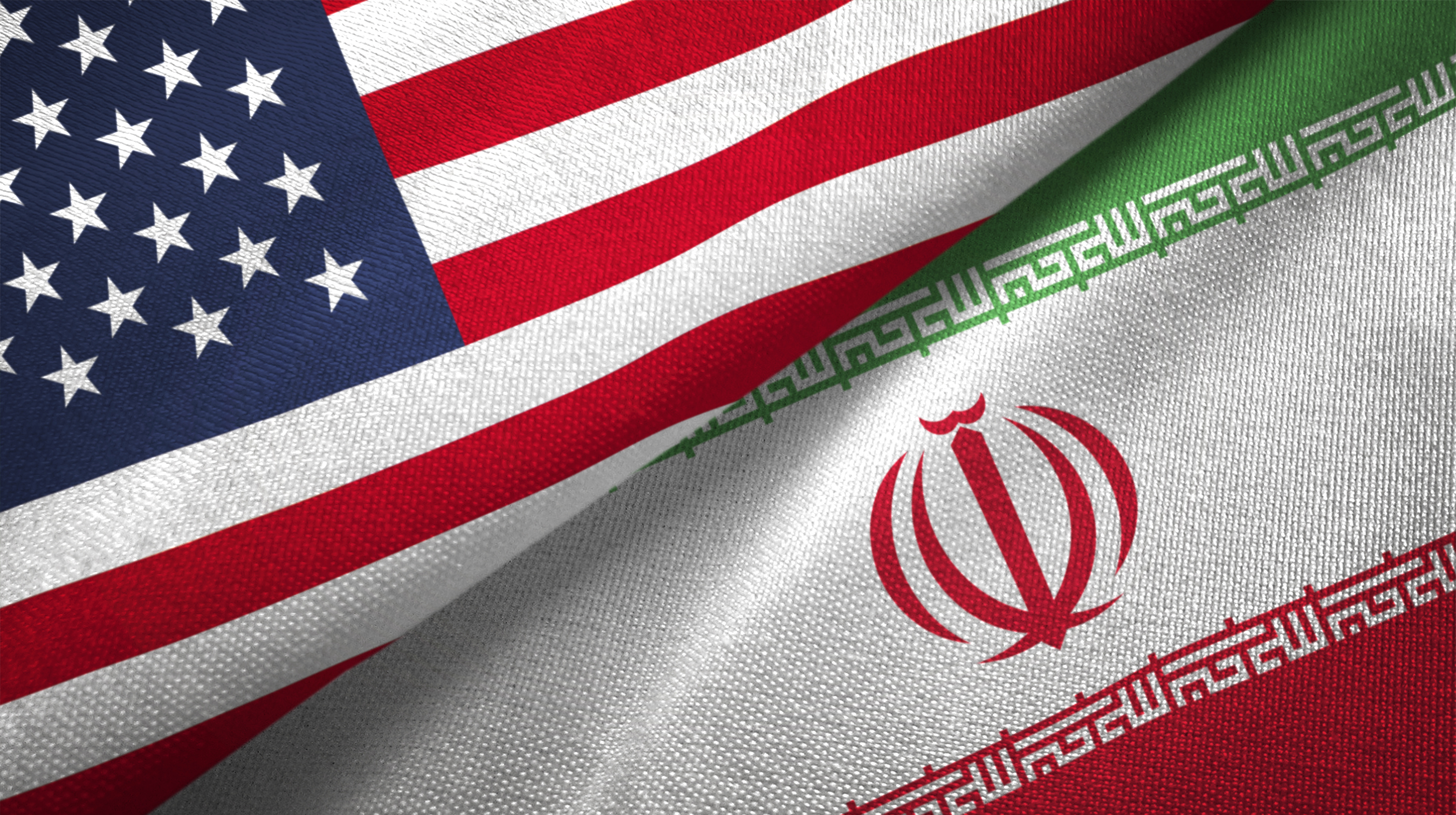
It has been over one month since the US-Iran war began and no end is seemingly in sight. Trump claims that ceasefire talks are ongoing, but Iran has dismissed that as ‘fake news’. The initial salvos of the war started on the morning of February 28, when US and Israeli missiles rained down over Iran. Among the dead were the Ayatollah Khamenei, the man who had led Iran for over three decades, senior Iranian government and military officials, and over 100 Iranian school children.
The war quickly engulfed the region as Iran and its allies launched a series of retaliatory attacks. In the intervening month, at least 1,900 people in Iran have been killed, per the International Federation of Red Cross and Red Crescent Societies (IFRC); at least 200 of the dead are children. Iran’s retaliatory strikes have resulted in the death of over 50 people across multiple countries. Lebanon, home to Iran’s major ally, Hezbollah, has seen particularly harsh fighting. Over 1,300 people have been killed by Israeli strikes, with Israel launching a ground invasion and occupying the southern region, permanently.
The US and Israel have sought to justify the legality of their attacks. They argue that that the strikes are to prevent the imminence of Iran obtaining a nuclear weapon, eradicate Iran’s missile capacity, eliminate Iranian threats to the US, Israel and their allies, and to open the door to regime change in Tehran.
However, these justifications have no bearing under international law. Iran did not present an “imminent threat” to the United States or Israel to the extent required for the lawful launch of a pre-emptive strike. However objectionable one may find the Iranian regime, that alone does not provide legal justification for the use of force.
A dangerous game of chicken
What has unfolded reflects an escalation of a broader US strategy of so-called “pre-emptive” attacks against Iran. The first major instance of this came in 2020 with the assassination of Qasem Soleimani, the 2nd highest ranking Iranian official at the time. The strategy was used again in on 22 June 2025, during the Israel-Iran War, when the US attacked three Iranian nuclear facilities. Notably, those attacks came during US-Iran negotiations. The US has clearly taken on a new and dangerous strategy towards Iran: comply with US demands or face military force, death and destruction.
The effects of this strategy are now unfolding in Iran. The current situation is a dangerous game of chicken between the US, Israel, and their allies on one side, and Iran on the other. There are only two ways the confrontation ends: deescalation or catastrophe. The situation as it stands is already a full-scale regional war. On its current trajectory, the war risks expanding into yet another American invasion in the Middle East, but this time against an opponent that is large, strong and has had decades to prepare.
Whether or not ceasefire talks are actually happening, the violence has not stopped. The US continues its troop build-up in the region, threatening a new phase in the war. Even if a full scale, “boots on the ground” war between the US and Iran is avoided, one must ask how much longer this situation can go for. Even if another uneasy truce is signed, what is to say that new strikes will not happen in a few months or years' time, bringing the region back to the brink of war? The US’ strategy puts it on a path of continued confrontation and conflict with Iran rather than durable resolution. War is not a question of if but when.
This approach forms part of a broader shift in American diplomacy towards an aggressive stance of “peace through strength.” What this strategy gains in its display of force, it loses in diplomatic credibility, and the loss is much greater than the gain. Two questions follow from this strategy. First, how can any state approach the negotiating table without fear of being attacked if talks fail to produce the desired outcome? Second, how can the United States – or any other state that supports it – credibly condemn another for using the same tactics on display here, or call for accountability on that basis? The answers to both questions may be that they cannot.
New world order?
International response to the US-Israeli attacks – and to this new US strategy – have been mixed and cautious. Russia has condemned the attacks. Spain has been notable in being the only NATO country to do so explicitly. Other countries have expressed support for the US, notably Canada. The United Kingdom, France, and Germany have signaled more strongly their backing for the US and Israel, releasing a joint statement stating that their countries are prepared to take “defensive action” against Iran “if necessary,” hitching their proverbial wagons to the US and Israel. The UK has further supported the US by allowing the US to use UK airbases, particularly RAF Fairford in Gloucestershire and Diego Garcia, in its strikes against Iran. Despite these actions by the UK, Prime Minister Starmer has remained adamant that the UK will not be drawn into the war.
Most countries, however, have stuck to a line of urging de-escalation and respect for international law, without necessarily assigning blame. This response from the international community is concerning. Perhaps countries see this as an opportunity to further their geopolitical goals regardless of any conflict with other ideological positions, or perhaps they are afraid that the US may turn its sights on them next. Whatever the reasoning, whether driven by strategic calculation or caution, the lack of overwhelming condemnation of these attacks reinforces a dangerous precedent.
The lack of push back against the US and Israel’s attacks, and indeed the support for them, is tantamount to an implicit or explicit acceptance of the US’ strategy being the new state of affairs. This acceptance further undermines the already precarious situation that international law finds itself in and surrenders any hope of allowing international institutions to fulfill their primary function. The United Nations Charter sets out a clear purpose: “To maintain international peace and security, and to that end: to take effective collective measures for the prevention and removal of threats to the peace... acts of aggression or other breaches of the peace, and to bring about by peaceful means, and in conformity with the principles of justice and international law.” Whether that framework remains meaningful depends on all states being held to the same standard, with credible sincerity in pursuing accountability, regardless of political convenience, or lack thereof.
If the usefulness of protecting good-faith diplomacy is not enough to convince some Western governments, as it seems to be the case with many Western nations who proport to be in favour of international law, then let me end with this: If you cannot condemn the US and Israel for their war with Iran, then you cannot credibly condemn Russia for its war in Ukraine, China for a potential war over Taiwan, or the actions of any state deemed to be adversarial. Accountability cannot be selectively applied.