Finding a renewed sense of purpose: Reflections on public leadership at Oxford
Ilana Miller talks about her experience on the Rising Public Leaders Programme, and the rare opportunity to create space and reconnect with the deeper purpose behind her work.
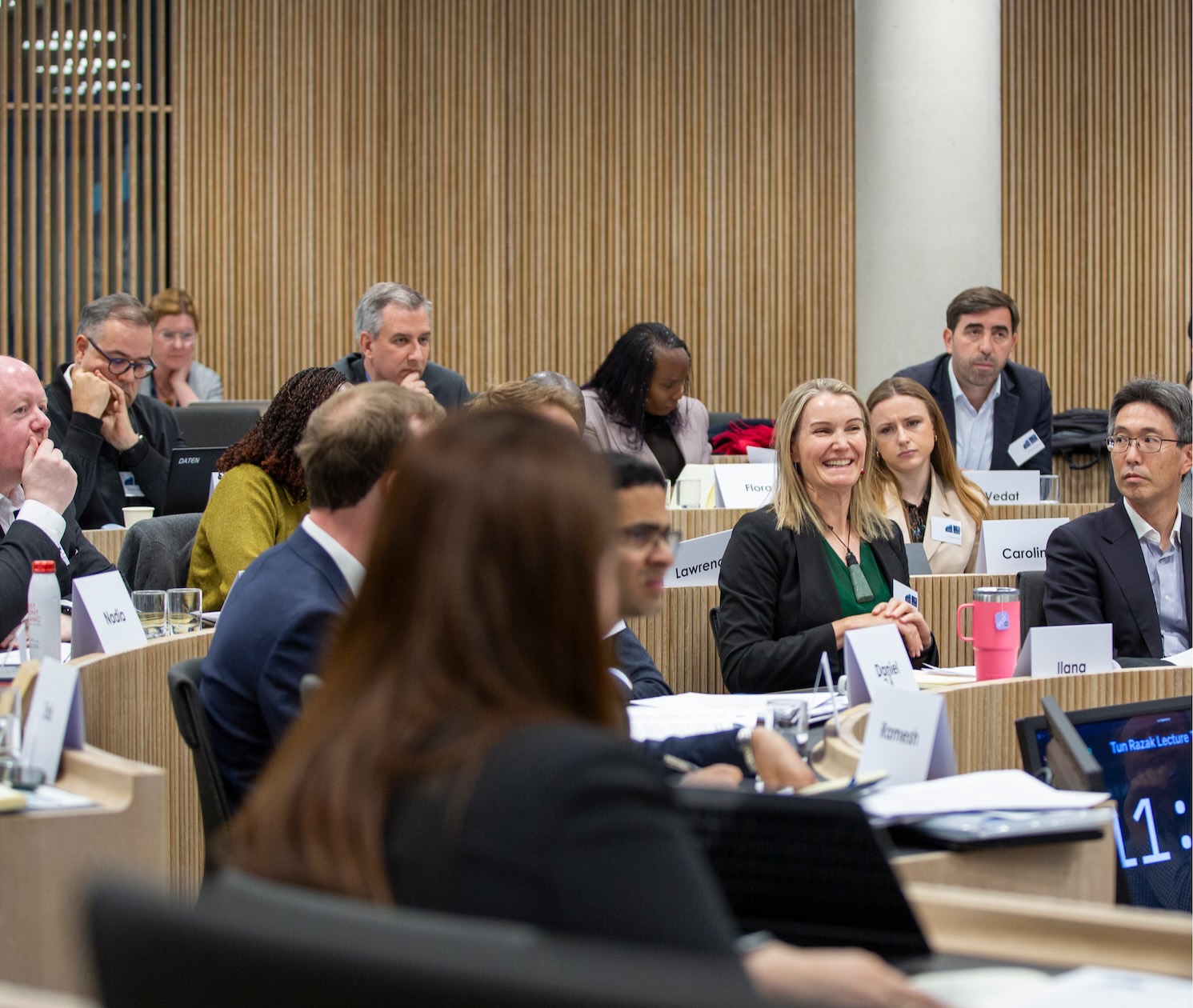
There is something slightly surreal about travelling from New Zealand to Oxford and realising you are about to spend a week alongside senior leaders from across the globe, all grappling with remarkably similar questions.
How do we lead through uncertainty? How do we make good decisions under pressure? How do we maintain integrity and public trust in increasingly complex environments?
Making space to step back
These questions sat behind my decision to apply for the Rising Public Leaders Programme. Like many public sector leaders, I spend most of my working life moving quickly between competing priorities, political pressures, operational challenges and long-term reform work. The opportunity to step back, reflect more deeply on leadership, and learn alongside peers from around the globe felt both rare and necessary.
What I did not expect was how energising and reaffirming the experience would be.
Different countries, familiar challenges
One of the most striking aspects of the programme was the diversity of the cohort. We came from over 20 countries and a wide range of public institutions and leadership roles. Yet despite all our differences, the conversations repeatedly returned to shared challenges.
Coming from New Zealand, I was struck by how often my experiences mirrored those faced in much larger jurisdictions. Whether discussing public trust, technology governance, institutional resilience or ethical leadership, we were all navigating the same tensions: finite resources, rising public expectations and increasingly difficult trade-offs.
Putting leadership to the test
The programme itself was intellectually demanding in the best possible way. Sessions moved quickly from theory into practical application through simulations, negotiations, case studies and group exercises. One moment we were debating integrity and ethical dilemmas in public life; the next we were navigating high-pressure negotiations or exploring the implications of emerging technologies and AI for democratic governance.
The work on narrative communication and storytelling was particularly memorable. Public servants are often trained to write carefully, comprehensively and defensibly. What the programme challenged us to consider was how to communicate clearly and authentically, without losing substance or integrity.
Like many public servants, I am far more comfortable presenting evidence and analysis than telling personal stories, so being pushed outside that comfort zone was both challenging and valuable.
Equally impactful were the sessions exploring decision-making under pressure and the cognitive biases that shape leadership choices. The simulations made visible how quickly judgement can become distorted by time pressure, institutional incentives or incomplete information. For anyone working in government, where decisions frequently need to be made under scrutiny and uncertainty, this felt particularly relevant.
The faculty combined academic rigour with practical relevance in a way that felt immediately applicable to the realities of public leadership.
The conversations beyond the classroom
Beyond the classroom, Oxford itself became part of the learning environment. Being surrounded by centuries of scholarship and debate added a real sense of perspective and occasion to the week.
Some of the most valuable insights came not during formal sessions, but over coffee, dinners and late-evening conversations comparing experiences across systems. Some of the most memorable conversations happened while walking between colleges or sharing stories about the very different realities of public leadership across our countries.
What stood out throughout the week was not only the calibre of the cohort, but the generosity people showed in sharing their failures, uncertainties and lessons learned.
I did not expect how quickly genuine friendships would form over the course of a single week. Some of the people I met were working in environments completely different to my own, yet the shared sense of purpose created an immediate connection.
I left not only with new perspectives and ideas, but also feeling like I now have friends and colleagues spread across the world, all trying in their own way to make government work better for the people they serve.
For me, that may ultimately have been the most valuable part.
Reconnecting with the purpose of public service
I left Oxford with new frameworks and tools, but more importantly with a renewed sense of pride in public service itself.
Public sector leadership can often feel consumed by immediacy: urgent decisions, operational pressures and constant delivery demands. The programme created space to reconnect with the deeper purpose behind the work and the communities we ultimately serve.