
Financing African Agenda 2063: Why digital governance and private capital matter
Fadumo Ali, MPP 2025, reflects on the development she has witnessed within the African Union and argues for the importance of agility in the continent's ongoing development.
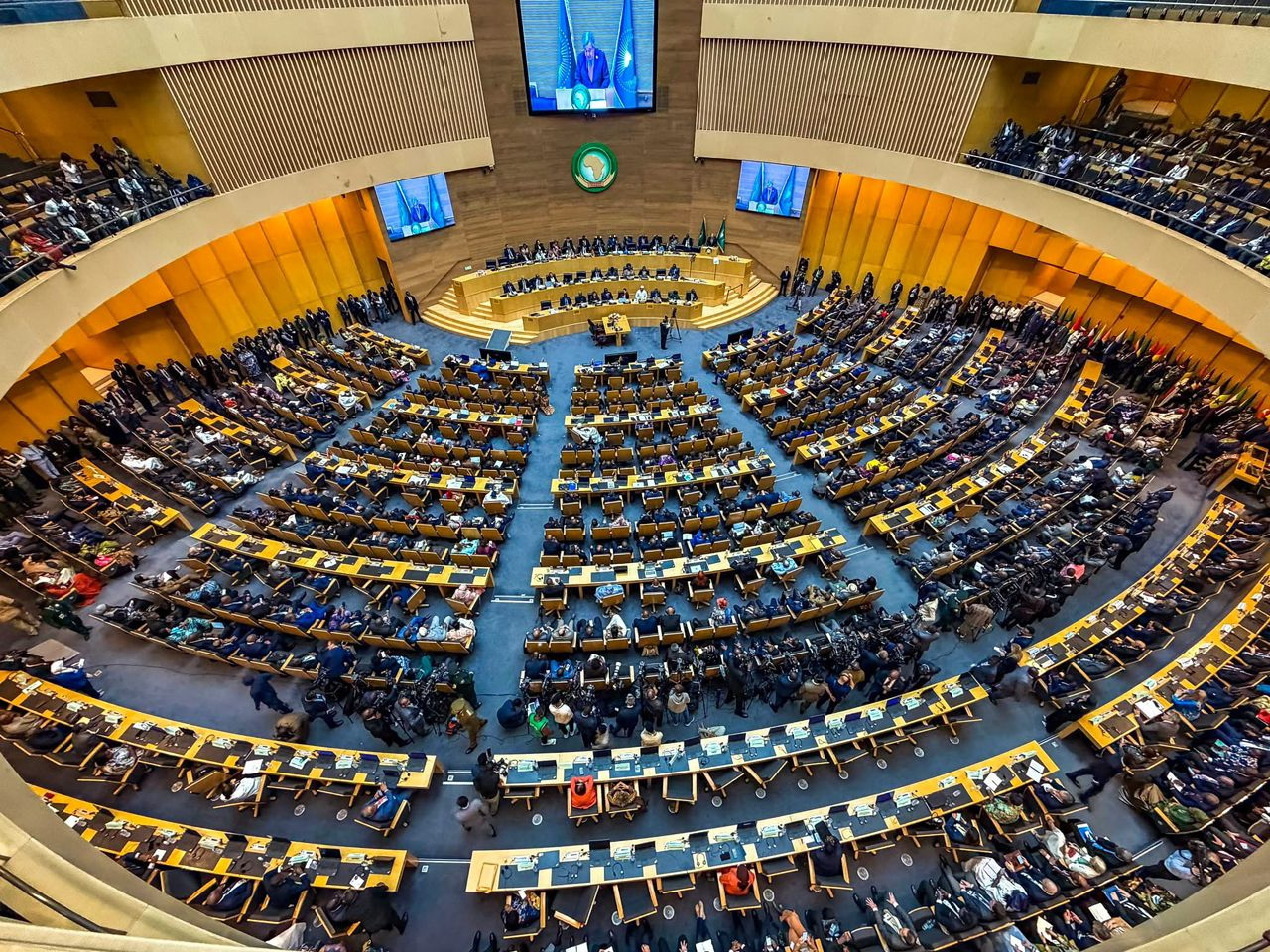
The annual African Union (AU) Summit is an opportunity for the continent to establish its development agenda, adopt strategic approaches, and foster collaborations.
With the Union now thirty years old, progress has been made on all three of these elements, but there is a pressing need for increased ownership and agency in the implementation of plans.
I attended my first African Union Summit in 2016 (when I was recognised as one of “10 Youth Heroes”), the year Agenda 2063 was launched. Agenda 2063 is Africa’s long‑term roadmap for inclusive growth and transformation, it is the blueprint guiding all African states.
With its first decade having focused on vision setting, the second Ten‑Year Implementation Plan for Agenda 2063 begins in 2026 and must focus on delivery. This requires confronting a simple but uncomfortable reality: Africa cannot meet its development goals through external aid alone. Financing for Agenda 2063 is designed to be predominantly African-led, with the goal of 75–90% of the required funding coming from domestic resources. However, as the continent enters the Second Ten-Year Implementation Plan (2024–2033), it still faces a significant $1.6 trillion financing gap for achieving both Agenda 2063 and the Sustainable Development Goals (SDGs).
Financing and digitising Africa’s development
Central to structural transformation for Africa is domestic resource mobilisation with fully operational financial institutions under the African Union. Institutions such as the African Investment Bank and the African Monetary Fund were created to support macroeconomic coordination, pool risk, and finance continental priorities. Without these strong financial institutions, Agenda 2063 risks remaining aspirational. However, dictating the finance they work with is also vitally important.
According to the IMF’s 2025 Economic Outlook, African GDP is experiencing rapid growth, with the continent projected to host over half of the world's fastest-growing economies in 2024–2025, often outpacing mature economies. While major economies like Nigeria continue to play a pivotal role in shaping continental growth trajectories, structural challenges including fiscal pressures, currency instability, and revenue mobilisation constraints highlight the importance of deeper financial reform and diversification.
Member State Contributions are expected to cover the majority of the budget. However, over 40% of Member States are currently behind on their yearly contributions. The "Kigali Tax" (a 0.2% levy on eligible imports into Africa) was designed to provide the AU with autonomous, predictable funding, though implementation remains uneven across the continent. Public resources alone will not close the gap, and Africa’s private sector, its pension funds, sovereign wealth funds, fintech innovators, and regional banks must become central partners in development. When private capital aligns with public priorities such as infrastructure, green industrialisation, and digital systems, it can drive sustainable, investment‑led growth.
Africa endorsed the AfCFTA Digital Trade Protocol and adopted it in February 2024 at the 37th AU Summit. The economic integration that the AfCFTA aims at depends on interoperable digital systems, efficient customs processes, and e‑governance platforms to reduce corruption and make it easier to do business. Digital identity tools can expand financial inclusion, while digital mobility systems can allow entrepreneurs to operate across borders with fewer barriers. Digitalisation is an opportunity for large-scale institutional reform and increased agility in government financing. A borderless digital infrastructure is the prerequisite for the "integrated continent" envisioned in 2016, allowing entrepreneurs to trade across all regions from North to South, and East to West with ease.
According to the African Development Bank, the New African Financial Architecture (NAFA) is a strategy presented as the basis for new African financial sovereignty and a method for significant resource mobilization. Dr. Sidi Ould Tah, the President of the Bank, described NAFA as a reorganisation for how Africa uses its capital for development, shifting from fragmented and dependent approaches to coordinated, systemic, and sovereign ones.
Demographic shifts in Africa
H.E. Mahmoud Ali Youssouf, Chairperson of the African Union commission, made a statement on a decisive shift toward institutional self-reliance during his address to the 39th Ordinary Session, where he emphasised that progress must be fuelled by internal agency, stating: "The Africa we want will not be granted to us by the benevolence of the global order; it must be financed by our own resources, protected by our own peace architectures, and driven by the digital brilliance of our own youth."
Youssouf's comments highlight the pressing challenge of Africa’s demographic makeup. The continent is experiencing a widening chasm between Africa’s youthful population and its ageing leadership. The median age in Africa is roughly 19; decision-making halls remain dominated by an older guard. Closing this generational gap is essential for transformative leadership. Policymaking needs to reflect the realities of a young, innovative, and rapidly shifting population.
Agenda 2063 was never meant to be a slogan. And delivering it requires three aligned pillars: strong continental financial institutions, strategic mobilisation of private capital, and digital‑first governance systems. If these come together, Africa can move from dependency to self‑reliance and from vision to transformation.