

Critical junctures: the United States, Israel and Lebanon
Jackson Sandler-Bussey, MPP 2025, argues that Israel’s 2026 invasion of Lebanon has exposed a widening gap between Israeli and American priorities, with grave humanitarian consequences and uncertain prospects for peace.
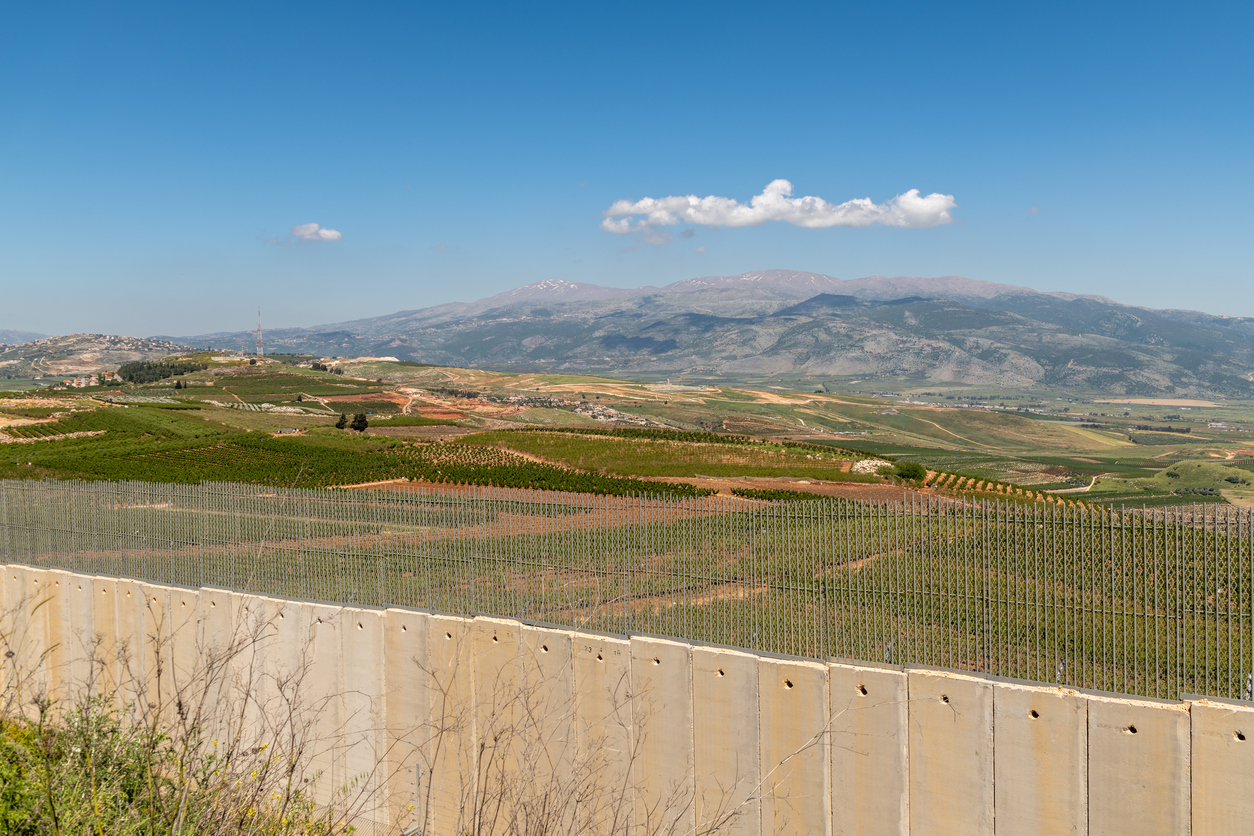
In March 2026, the war between the US, Israel, and Iran reached Lebanon. The Iranian-backed group Hezbollah fired missiles at Israel in response to the assassination of the former Iranian Ayatollah Khamenei – a claim disputed by Hezbollah. Israel retaliated by launching strikes against Lebanon and the advancing of Israeli troops further into Lebanon. By late-March, the conflict had developed into a full-scale invasion of the southern part of the country.
The war with Lebanon is one of many military interventions that Israel has engaged in over the two countries’ modern histories. Despite Israel’s frequent fighting with its neighbour, its main ally, the United States, has always supported it. The war in Lebanon represents a change to that relationship.
Israeli and American goals for Lebanon and the Middle East are diverging, causing strain. With the US-Iran War resuming, the US has less ability to oppose Israeli plans for Lebanon. A framework deal between Israel and Lebanon was brokered by the US in late June, yet there is doubt around long-term peace, leaving Lebanon caught in the crossfire.
Fifty years of fighting
The current conflict between Israel, Hezbollah and Lebanon has almost fifty years of history. In 1982, Israel intervened in the then ongoing Lebanese Civil War, invading and occupying Southern Lebanon. Israel’s actions prompted US involvement, bringing US soldiers into direct conflict with the Arab nations for the first time. This war saw the rise of the Iran-backed Hezbollah as a resistance movement to Israel.
The Israeli occupation of Southern Lebanon would not end until 2000, 10 years after the conclusion of the Lebanese Civil War. By that time, Hezbollah had cemented itself as the dominant anti-Israel voice in Lebanese politics, using the continued occupation as ammunition for its cause. Tensions between Hezbollah and Israel erupted into conflict in 2006, catching many in the crossfire. Over 1,000 Lebanese civilians died and over 1,000,000 were displaced. Countless structures were damaged or destroyed, costing billions of dollars. The US had given Israel the freedom to do what it saw fit.
The 2026 invasion
Israel’s recent invasion of Lebanon was accompanied by markedly different language and posturing than the conflict that preceded it. While Israel had not fully withdrawn its forces after the 2024 ceasefire, what Israel signalled was more akin to 1982: a full, long-term occupation of Southern Lebanon.
While in the past Israel seemed to accept the disarming of Hezbollah, now the state appears set on the group’s total destruction. Many have justified the occupation as necessary to create a safety buffer for Israel and drive out Hezbollah for good. However, some question whether this is Israel’s only motive, alleging Israel is preparing to settle the region. These accusations are strengthened by the humanitarian cost of the war.
The war has already killed over 4,300 people in Lebanon and displaced of over 1 million. Israel has been engaged in extensive destruction and demolition of infrastructure in southern Lebanon, destroying over 1,400 buildings. Human Rights organisations and legal experts have raised serious concerns about these actions, amounting them to war crimes. In many instances, entire villages have been wiped off the map.
The course of the war has not been uniform. On April 16, 2026, Israel and Hezbollah signed a 10-day ceasefire. This ceasefire was further extended in late April and May. On 26 June 2026, Israel, Lebanon and the US signed a tripartite “framework deal” to end the war. However the fighting has not stopped, and human rights groups have criticised the deal for betraying the victims of the war. It is still uncertain whether the deal will endure. Hezbollah, although not a party to the negotiations, has already rejected the agreement.
Strained relations
With diverging US and Israeli priorities for Lebanon, Israel is not receiving the support from the US that it once had. Israel has made clear its intent to occupy Lebanese territory, regardless of US demands or the “framework deal”. The US would rather see Lebanon intact and bolster the Lebanese government (without Hezbollah), creating another pro-western state in the Middle East.
Israel’s conduct since the October 7th attacks in 2023 and in the Iran and Lebanon wars have contributed to the souring of US-Israel relations. US President Donald Trump and Israeli Prime Minister Benjamin Netanyahu have had multiple public spats criticising each other, particularly over the handling of the wars. Israel, growing increasingly unsatisfied with being tethered to the US, has sought to distance itself and reduce its reliance on the US. Likewise, the US, growing increasingly frustrated trying to keep its ally in check, has not giving Israel as much of a “free hand” as before.
These strained relations are compounded by growing disapproval of Israel by the American public. Americans are increasingly discontent with the Israeli government and the Israeli people in general. Criticism of military aid to Israel, the US-Israel relationship, and pro-Israeli groups in American politics have become much more commonplace. The shift of the American public against Israel transcends party lines, and is being led by younger voters.
Whether or not this distancing is temporary remains to be seen. The situation is made even more complicated by the passage of the 2027 National Defense Authorization Act (NDAA) in the US House of Representatives, which would further entangle the US military with Israel. While the bill has yet to become law–it must still be passed by the Senate–it runs counter to Trump’s harder approach towards Israel.
What is clear are the disastrous humanitarian consequences of this war. So far, the framework deal has failed in preventing more death. While Israel’s invasion of Lebanon is often overshadowed by its much larger brother, the US-Iran War, the human cost is no less real. The US’s inability or unwillingness to exert more pressure on its longtime ally, even when it is in open opposition to US interests, only serves to prolong the catastrophe in Lebanon. It has been a long time since the US and Israel have been on such opposing terms. Perhaps now, the US can justify defying Israel and forcing an actual peace.