

Bangladesh’s 2026 national election and referendum: what comes next?
Master of Public policy student Mazhar Uddin Bhuiyan explores what Bangladesh’s 2026 election and referendum mean for the country’s democratic future.
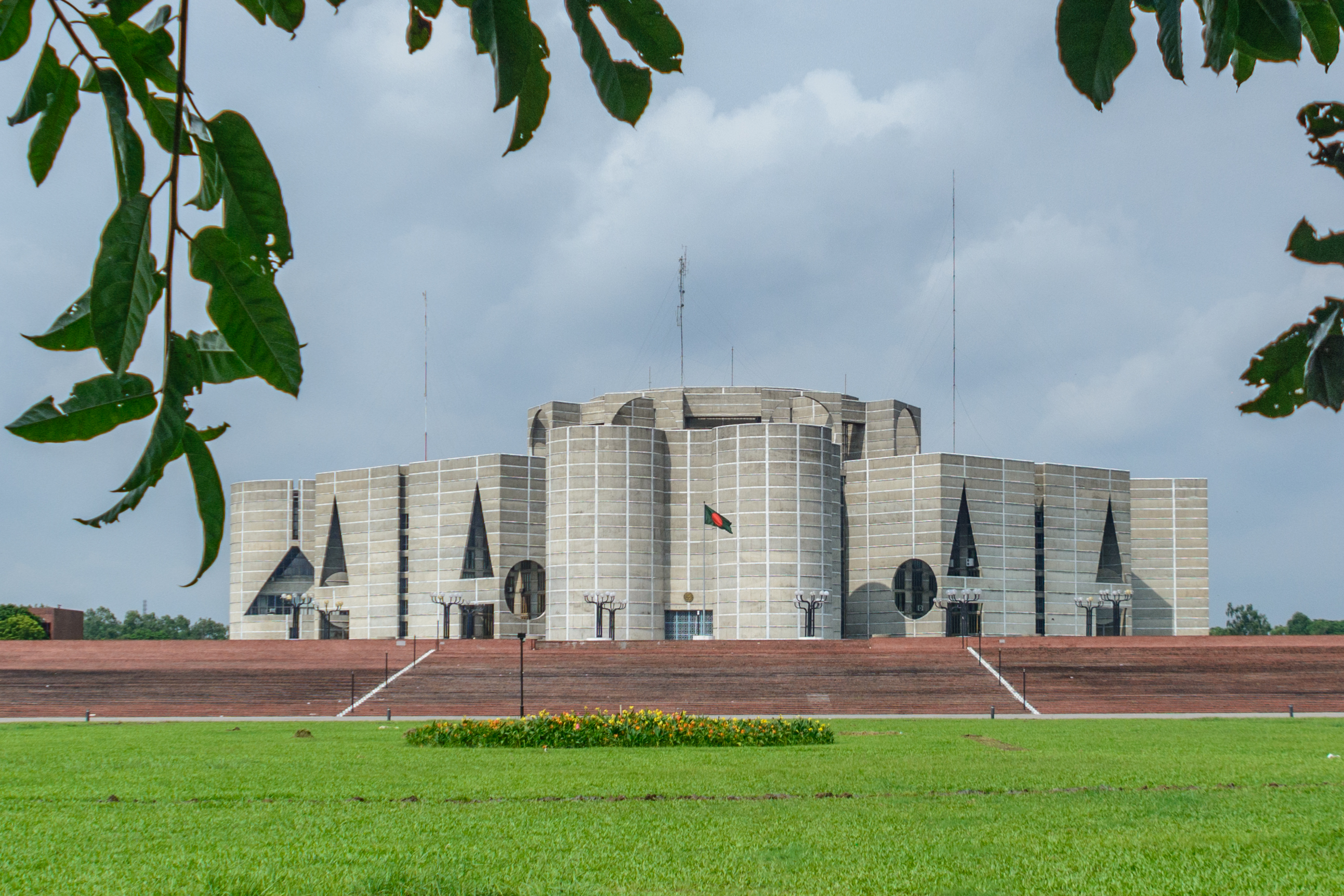
On 12 February 2026, Bangladesh returned to elected rule through a parliamentary election and constitutional referendum. The Bangladesh Nationalist Party (BNP), led by Tarique Rahman, secured a decisive two-thirds majority, while voters endorsed the referendum on constitutional reform proposals contained in the July National Charter.
But the result has created a new dilemma. The BNP’s election manifesto differs in key areas from the reform proposals in the Charter. The central question now is whether the government will implement the Charter, or reinterpret it through the lens of its own manifesto. How that gap is resolved will shape Bangladesh’s political future.
From protest to interim rule
For years, Bangladesh’s politics revolved around two political blocs- the Awami League led alliance and the Bangladesh Nationalist Party (BNP)-Jamat-e-Islam alliance. The July Movement – mass protests in July 2024 – brought the Awami League’s rule to an end and led to the formation of an interim government under the leadership of Muhammad Yunus.
The constitution did not provide for such an arrangement, creating immediate legal uncertainty. The interim government was tasked with fixing the state institutions before handing power back to an elected government.
It formed six reform commissions on the constitution, judiciary, elections, police, administration and anti-corruption. Yet the Yunus-led interim government was under massive pressure from the very beginning. The economy was unstable, street protests continued across the country, and law enforcement weakened. In some cases, officials were forced to resign under pressure, and local groups took justice into their own hands, further eroding trust in the rule of law.
The period was marked by both reform ambition and institutional fragility.
The consensus commission and the July Charter
After reform commissions submitted their reports, a “consensus commission” was formed to bring political parties together and combine the reform proposals. Notably, the Awami League and several of its former allies were excluded from this process.
33 parties took part in negotiations and 24 political parties ultimately signed the July National Charter including BNP, Jamat-E-Islami and National Citizen Party (NCP). The NCP has been recently formed following protests, with its leadership emerging from the protest leaders. The Charter included 84 reform proposals, including a two-term limit for the prime minister, the creation of a new 100-member upper house in parliament, rebalancing powers for the president and Prime Minister, more seats reserved for women, full independence for the courts and Election Commission, and wider protection for basic citizen rights.
For those who participated in the July Movement, the Charter serves as recognition of the protests and supports their push for institutional reforms. However, some political parties that were neither invited to nor participated in the consensus commission portray the Charter as a document that could disrupt future state capacity and scope.
2026 national election and referendum
The February 2026 election delivered a landslide victory for the Bangladesh Nationalist Party (BNP), while the 11 Party Alliance, led by Jamaat-e-Islami and the student-led National Citizen Party, emerged as the primary opposition. At the same time, voters approved the July Charter in a national referendum, giving the new parliament a popular mandate to implement reform.
Controversially, the Awami League was not allowed to field candidates and former Prime Minister Sheikh Hasina urged Awami League supporters not to vote. To some, the ban was ‘poetic justice’; to others, it was a democratic deficit that disenfranchised a large segment of the population.
Yet the referendum’s constitutional basis remains disputed. Bangladesh’s constitution does not clearly provide for such a vote, raising questions about its legal standing. If the courts were to find the July Charter Implementation Order 2025 unconstitutional, the referendum itself could face a challenge.
Further complexity arises from the ballot’s design. A “Yes” vote approved both the Implementation Order 2025 and the Charter itself, yet the two documents are not identical. One of them includes the “notes of dissent” from political parties, creating confusion about what exactly has been approved. Meanwhile, other elected parties have taken differing positions in their manifestos on these constitutional changes. Implementing a referendum after the election would significantly reduce the concentration of power for the government.
Here lies the clearest policy fault line. These ambiguities are sharpened by gaps between the Charter and the BNP’s own manifesto. The Charter proposes an Upper House elected through proportional representation for professionals and intellectuals, while the BNP prefers a seat-based system that favours established political power. The Charter also suggests the Prime Minister should not hold a party leadership position to prevent the centralisation of power – a proposal absent from the BNP’s manifesto.
Although the BNP signed the July Charter, it did so disapprovingly and has pledged to implement reforms “in line with the people’s mandate”. In his victory speech, Tarique Rahman stressed national unity. Yet the party’s secretary-general has repeatedly highlighted the manifesto as the guiding document. This gap between the referendum’s broad endorsement and the party’s specific promises now represents the central policy challenge facing the new government.
Challenges for the new government
The scale of the BNP’s mandate does not reduce the scale of the challenges ahead. The economy needs urgent repair, inflation is high, jobs are scarce, and foreign reserves are strained.
Law and order must be restored. Reconciliation with Awami League supporters is also essential to avoid new cycles of revenge. Externally, relations with India remain tense. China and the United States are closely following how Dhaka approaches them.
Above all, the government must deliver meaningful reform without repeating past mistakes. Young voters who mobilised in 2024 expect real change, not just new faces.
The future of Bangladesh rests on the new government’s ability to transition from a revolutionary mandate to institutional governance. Will the party use its large majority in parliament to introduce a seat-based upper house, as it prefers, or will it keep the position that the prime minister can also remain the head of the party? Will it treat the referendum result as binding, or only as general guidance?
Beyond these choices lies a bigger question. Can the new government truly restore the rule of law and strengthen institutions after a period of political instability? The answer will shape the country’s political future for years to come.