What’s the point of a master’s degree in an AI world? Commitment, community and judgement
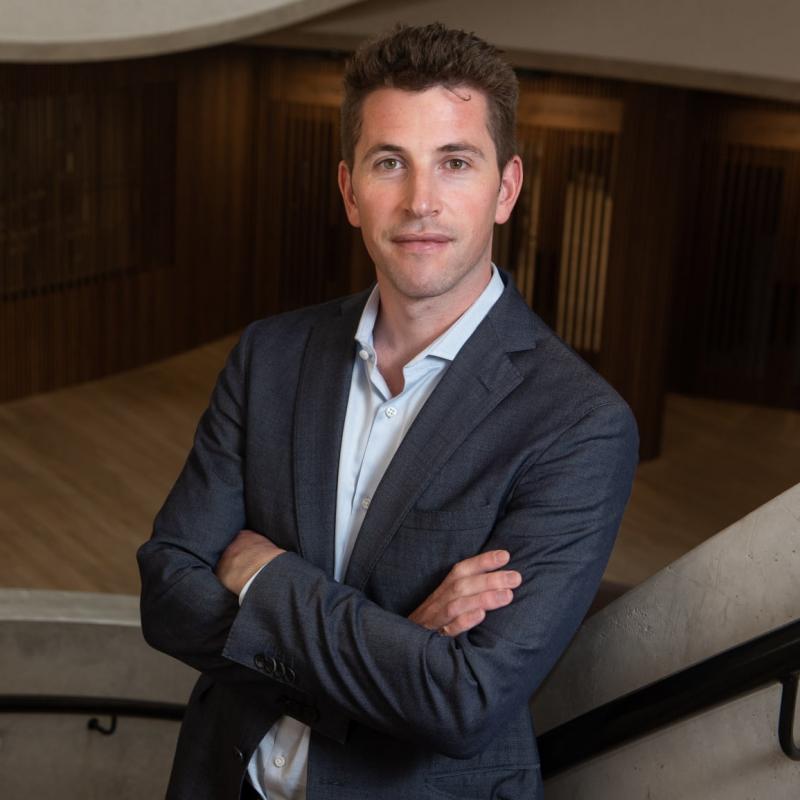
Tom Hale, Professor in Public Policy and Director of the Master of Public Policy, argues that as AI makes knowledge easier to access, education has a vital role in helping students develop the capabilities technology cannot provide, from device free classrooms to learning with and from others.
As AI makes it easier than ever to call the knowledge you need down from the cloud, many people are asking: is more school worth it? Why become a ‘master’ of anything if machines seem to have already mastered everything?
The power of each new model is indeed more and more impressive, and my colleagues at the Blavatnik School are working hard to understand what that means for the world, as well as teaching our students the latest techniques. But it is hard to see AI solving the kinds of challenges the world’s governments bring to us at the School. How do I hold together my community in a crisis? How do I get two sides who hate each other to agree a way forward? How do I make this law actually work on the ground?
AI can likely give you some helpful ideas on these, but even with the most advanced model or the best prompting a machine is not going to do them for you. That falls to you, interacting with other people, in the real world.
Today’s students know this, and it worries them. In surveys and discussions, our Master of Public Policy (MPP) students say they’re concerned that overreliance on AI tools will degrade their own ability to think and act, and, at the same time, they will be left behind if they do not use them. A growing body of research backs up these fears, showing that using AI tools can both increase productivity and reduce learning. Worse, this trap bites harder the less experienced you are. So how can you actually sharpen your brain?
Educators can help because we can – with care – give you three superpowers: commitment, community and judgement.
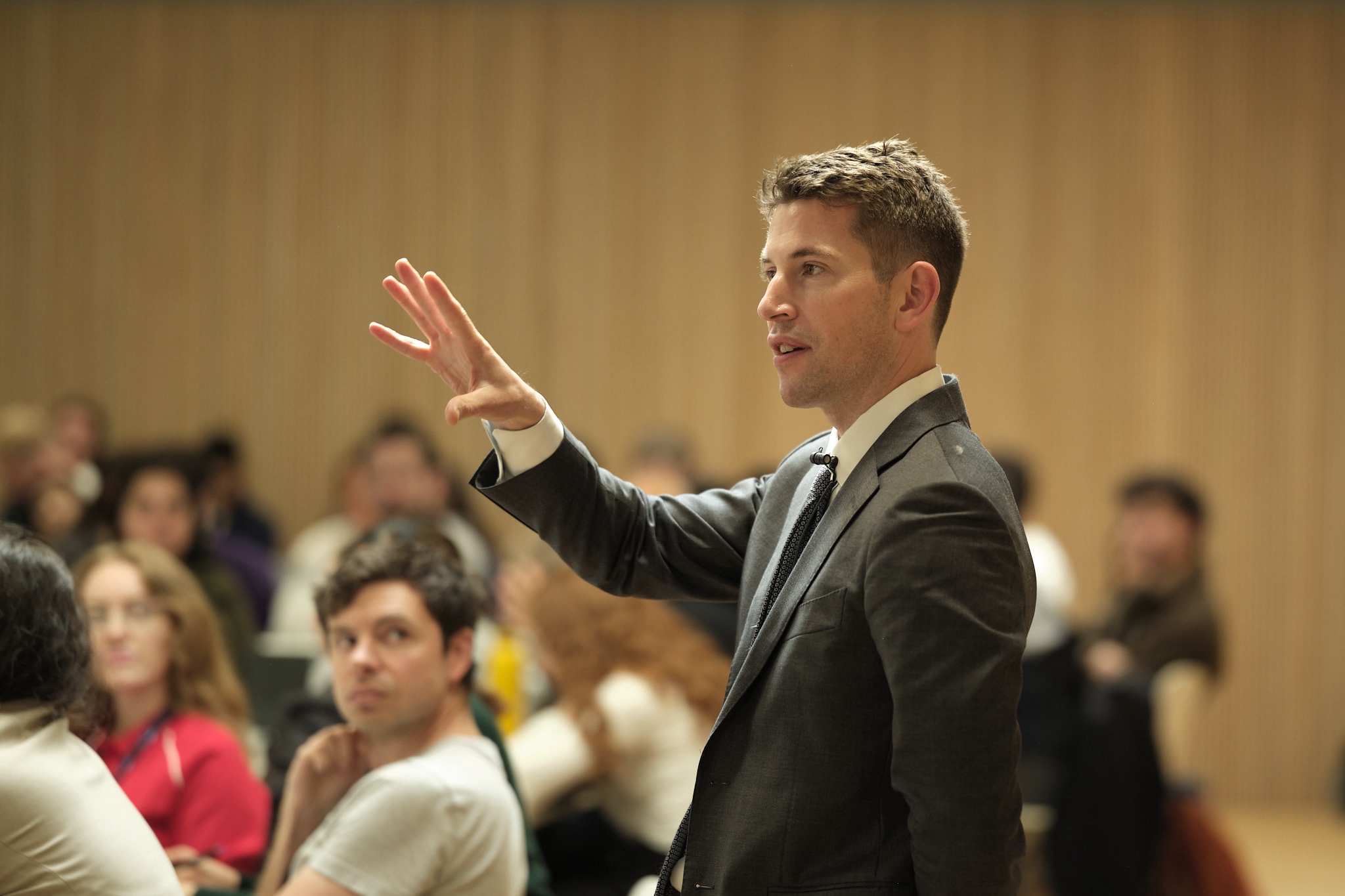
In an age of distraction, commitment is the capability that unlocks focus and effort. If you want to grow, you need to find a way to put in the work. Half of that is accepting constraints that, like weights at the gym, give you just the right amount of strain and support. At the Blavatnik School that comes in teaching through discussions, cases and exercises where ‘device free’ is the default. We are all expected to walk into the classroom having genuinely wrestled with hard material the night before, not just armed with a few AI-generated bullet points. And it comes from assessments that range from no-book-no-Internet exams, to presentations, to simulating a cyber attack, or a chip war, or a climate negotiation.
The other half of commitment is motivation. When what you’re learning hones and advances your core purpose, you can stretch beyond what you thought was possible. Every part of the MPP is designed to advance the goal that draws people here, captured in the phrase ‘a world better led, better served, and better governed’. If that’s your vision, there is no place that will make you more excited to learn. This does not mean that every single moment is, itself, thrilling (though there is plenty of brilliance and even some glamour), and that’s the point. Purpose, not thrill, is what sustains hard work.
Shared purpose also lies at the heart of community, another secret power educators can give you. If you want to get anything done in the world, you have to work with people. And so our MPP programme is built around working with people. There is an art and science to this – which we teach – but it is primarily a muscle that comes from practice: in classrooms, in shared projects, in the welter of activities our students organise with each other.
By learning to work together, especially with people whose perspectives radically differ from your own, you cultivate the quality that distinguishes a community from just a group of people: trust. And trust, in turn, allows people to actually learn from each other. It is what allows difficult conversations to shift perspectives, not entrench them. It also forges the lifelong bonds that you will be able to draw on – and keep learning from – for the rest of your life.
Finally, learning that mixes knowledge with practical application – as all our courses do – cultivates judgement. No public policy dilemma has only one, clear solution that professors or AI tools can just give you, because understanding a problem and its solutions is not the same as deciding what to do. For that, you need to know the right questions to ask, recognise when a plausible answer is wrong, integrate different objectives, and have the creativity to reframe a problem so that different solutions become possible. The MPP helps you build this muscle by forcing you to grapple with the challenge of turning knowledge into action. Drawing on the experience of both the most senior practitioners and those on the ground, you will work with others in exercises and simulations to design solutions, debate alternatives and find ways to bring your group closer to its goal.
Of course, you can – indeed must – learn commitment, community and judgement from your own experience. But if you only learn from the jobs you’ve had before, it’s unlikely your horizon will expand. By helping you both reflect on your own experience and compare it to that of both peers and leaders from around the world, the MPP helps you move past the biases and blind spots you didn’t know you had.
Gaining knowledge may now be easier than ever. But it’s still the ability to use that knowledge that makes you a ‘master.’
Applications for the Master of Public Policy are now open. Apply by 2 December 2026.