
“Flying with two wings”: Africa’s opportunity to strengthen economic governance
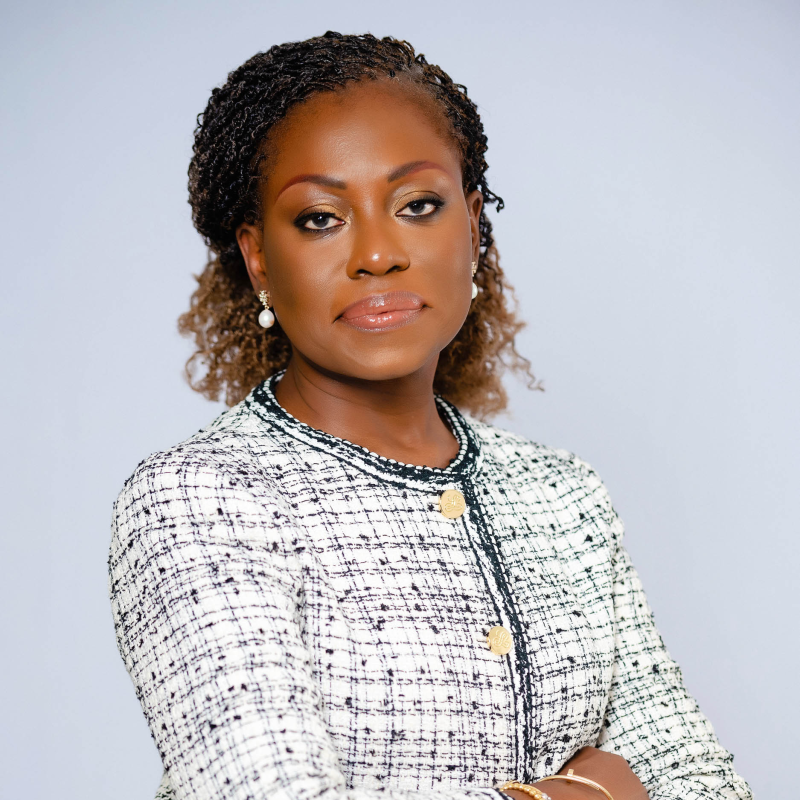
Elsie Addo Awadzi, Visiting Fellow and Former Deputy Governor at the Bank of Ghana, outlines the opportunity cost of failing to give women leaders meaningful authority in Africa’s most powerful institutions and her proposal for a forthcoming Women in Economic Governance Initiative.

Governments are facing a more complex economic reality.
Across the world, governments are navigating an increasingly demanding economic landscape. Elevated debt vulnerabilities, climate shocks, geopolitical fragmentation, demographic transitions, and rapid technological disruption are reshaping the practice of economic governance.
In this environment, ministries of finance and other economic sector ministries, central banks, and financial regulators are expected to do more than ever before: preserve macroeconomic and financial stability, sustain market confidence, manage crises, coordinate reforms, and make difficult decisions under uncertainty.
Yet one of the most overlooked constraints on institutional performance remains leadership systems that underutilise a significant share of available talent: women leaders.
Flying with two wings
A leadership system that systematically underutilises half the available talent cannot perform at its full potential. To borrow a simple but powerful metaphor: institutions cannot fly with one wing.
Strengthening women’s leadership in economic governance is therefore not simply a matter of fairness. It is a matter of institutional performance, policy quality, and long-term resilience.
This insight underpins my proposed Women in Economic Governance Initiative (WEGI): a platform designed to help institutions convert talent into authority and strengthen leadership systems at the heart of economic policymaking in Africa.
A persistent gap in who leads economic policy
Despite growing demands on economic institutions, leadership pathways remain constrained.
Globally, women remain underrepresented in senior leadership across public governance and economic policy. The gap is particularly visible in economic governance. Only 11.3% of finance ministers are women, and as of 2026 only 35 of 185 central bank governors globally were women, up from 30 in 2025, and 29 as of 2024.
Across Africa, progress has been real but uneven. Women hold 22% of cabinet positions and 7% of top executive roles. Representation in African cabinets varies widely—from 7% in Equatorial Guinea to 60% in Rwanda; and representation in Parliament from 4% in Nigeria to 61% in Rwanda.
Only four of 41 African central banks have female governors in 2026, with the number of female deputy governors dropping from 18 in 2025 to 16 in 2026. Finance, trade, energy, and other strategic ministries also remain largely led by male ministers, with only two female finance ministers as of 2022. In Ghana, a recently established five-member Fiscal Council, whose members were nominated by the President, is composed entirely of men.
Even where quotas have been introduced, gains in representation have not consistently translated into sustained authority, particularly where informal power structures remain unchanged.
Women remain less likely to lead core policy portfolios, sit on or chair agenda-setting committees, manage crisis responses, and control budgets or strategic mandates. This is the central governance challenge: not simply representation, but the persistent gap between representation and authority.
Why this matters for institutional performance
Leadership systems that systematically draw from narrow pools of talent, with less diversity, tend to generate predictable weaknesses such as shallower succession pipelines and greater vulnerability to groupthink. In economic governance, where credibility is a strategic asset and policy mistakes can be costly, these are not marginal concerns. They are material institutional risks.
The central governance point is not that women lead “better” by nature. It is that diversified leadership broadens the epistemic base, strengthens deliberation, and improves decision-making under uncertainty, particularly in complex policy environments.
A growing body of research links women’s leadership with stronger governance and institutional outcomes. Studies across regions suggest associations between women’s leadership and improved accountability and governance quality, stronger investment in health, education, social protection, better crisis response capacity, and enhanced institutional adaptability and sustainability.
In sub-Saharan Africa, reductions in gender inequality are associated with higher per capita economic growth. But the evidence also points to a crucial condition: these benefits materialise most reliably when women hold real authority and influence, not when their inclusion is symbolic.
Why progress often stalls
The persistence of the representation–authority gap is not primarily a pipeline problem. Across many countries, there is no shortage of highly qualified women professionals. The constraint lies in institutional systems.
Opaque appointment and promotion processes, limited sponsorship, and unequal access to agenda-setting responsibilities and system-level mandates often block progression to senior office. Workplace norms built around constant availability can penalise women managing an uneven share of domestic responsibilities alongside demanding policy roles. Women leaders may also face heightened reputational and political risks.
Interviews with senior leaders across African economic institutions reinforce this picture, pointing to a “technocratic missing middle.” Institutions are developing talent, but not consistently deploying it where it matters most.
Pathways into politically appointed leadership roles are diverse, drawing talent from the public service, international financial institutions such as the International Monetary Fund and World Bank, the African Development Bank, academia, policy think tanks, and the private sector. Yet progression frequently depends on crossing critical thresholds of visibility, credibility, and trust.
Many women leaders describe navigating these pathways within a structural “double bind.” Informal tests of “fit” and “trustworthiness” are often applied more stringently to women than to men. Confidence may be interpreted as arrogance, while collaborative leadership styles may be mistaken for weakness. Some also report a persistent “proof burden,” requiring repeated over-preparation to counter assumptions about their readiness to manage complex portfolios, lead through crises, negotiate high-stakes outcomes, communicate under pressure, and oversee major projects, teams, and budgets.
These dynamics shape not only individual trajectories, but also the broader institutional climate for women who might otherwise aspire to senior leadership.
Existing initiatives to advance women’s leadership
Across the global and African landscape, a growing number of initiatives are advancing women’s leadership. The list is worth mentioning at length to signpost these organisations. It includes the UK’s Women in Finance Charter, the Association for the Advancement of African Women Economists, Co-Impact, the Leadership and Diversity Program for Regulators (a joint initiative of Women’s World Banking, Oxford Saïd Business School, and the Alliance for Financial Inclusion), the Toronto Centre’s Leadership Program for Women Supervisors and Regulators in Africa, the Ellen Johnson Sirleaf Centre’s Amujae Initiative, and the Women In Leadership Advancement Network.
Such initiatives have made important contributions through leadership development, advocacy, expanded visibility, stronger peer networks, and improved representation. Yet several gaps remain pronounced in economic governance leadership.
Many programmes focus on capacity, confidence, and networking, but fewer directly address agenda control, decision-making authority, and succession systems. Others develop individuals but offer little follow-up support to help them navigate cultural biases and other structural barriers, making progress fragile. Risk environments are also often overlooked: harassment, reputational attacks, and rigid availability norms can drive women out or lead to burnout, yet many programmes fail to treat these constraints as core leadership sustainability issues. Lastly, these initiatives rarely collaborate to leverage synergies among their beneficiaries and alumni, limiting efforts to build a stronger and more sustainable pipeline.
Africa’s opportunity to strengthen state capability
Africa’s next decade of development will depend heavily on the strength of its economic governance institutions. Managing debt sustainably, mobilising domestic revenue, deepening financial systems, accelerating industrialisation, leveraging technology, and responding to climate and geopolitical shocks all require capable institutions with deep leadership benches.
Expanding women’s pathways into authority is therefore not peripheral to development strategy. It is a core component of state capability.
If the challenge is structural, the response must also be structural. That means complementing leadership development with reforms to succession planning, promotion systems, sponsorship, talent identification, strategic portfolio allocation, committee leadership, decision-rights, institutional culture, and retention. Success should be measured not only by how many women are present, but by whether they exercise increasing levels of real influence.
A new leadership agenda for economic governance
The Women in Economic Governance Initiative is designed to meet this challenge. It intervenes at three levels:
- Firstly, a Fellowship that expands the pool of credible candidates at the threshold of senior leadership by equipping high-potential women with executive readiness, strategic visibility, networks, and sponsorship.
- Secondly, a Leaders’ Circle that engages incumbent leaders, both women and men, and their institutions in action-oriented dialogue to strengthen succession systems, sponsorship norms, and access to policy-shaping mandates, supported by a Charter encouraging measurable commitments to addressing structural barriers.
- Thirdly, a dialogue and evidence platform that shifts norms and incentives through data, rankings, and applied research, tracking impact, rewarding progress, and normalising more inclusive leadership pipelines.
Economic governance in the twenty-first century requires leadership systems capable of drawing on the broadest possible pool of expertise. Countries and institutions that do so will be more credible, more adaptive, and better equipped to manage the shocks ahead. Those that do not may find that exclusion carries a growing economic cost.