

"Confidence in a legal system is never settled. It has to be maintained, deliberately, or it erodes": Shoaib Rizvi interviews former Chief Justice the Right Honourable Beverley McLachlin PC, CC
MPP alumnus Shoaib Rizvi speaks with former Chief Justice the Right Honourable Beverley McLachlin about judicial independence, Indigenous rights and the enduring importance of public confidence in the rule of law.
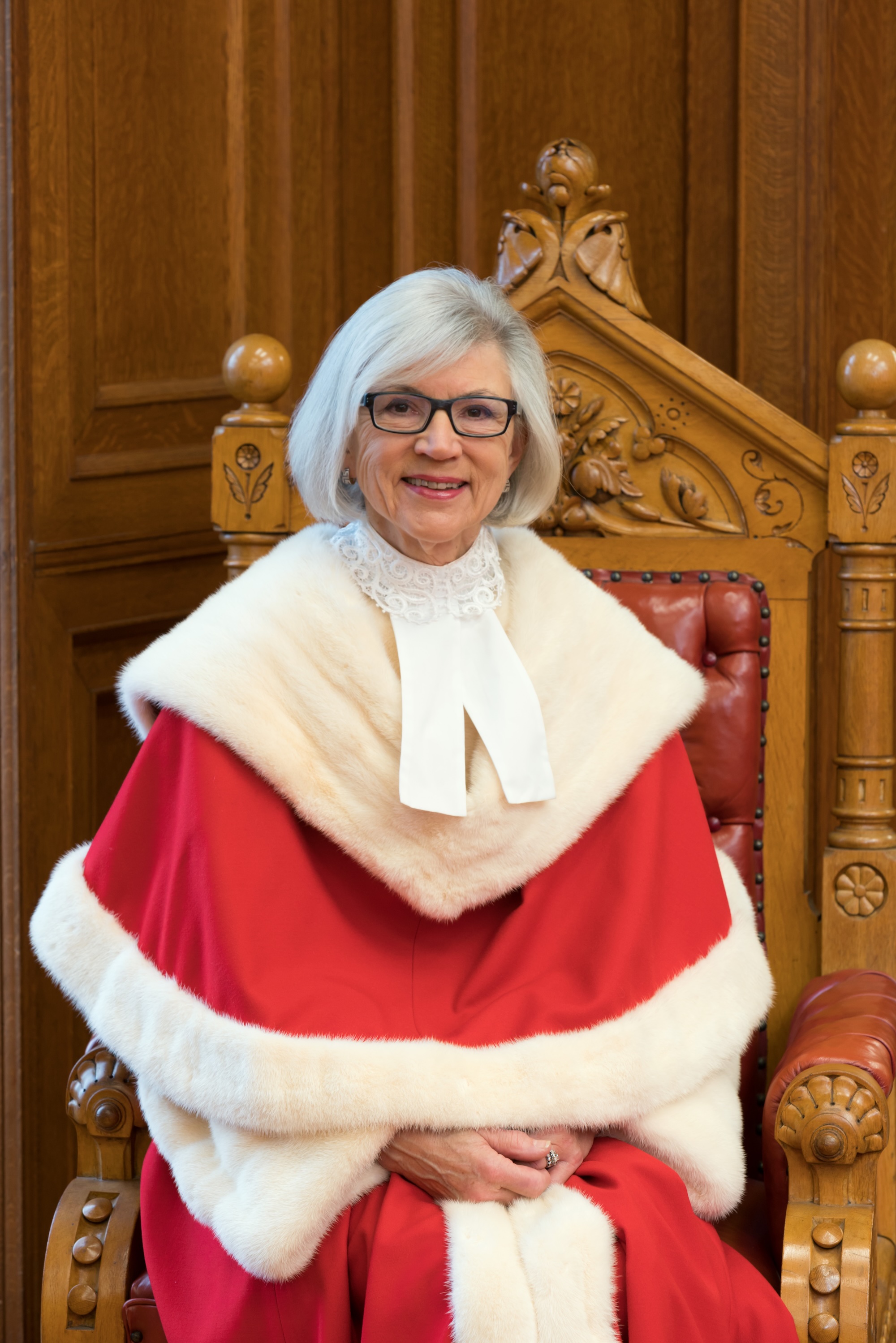
Former Chief Justice Beverley McLachlin spent a lifetime testing where power ends and rights begin. As the first woman to lead the Supreme Court of Canada and its longest serving Chief Justice, she built a legacy on landmark rulings in Indigenous rights, constitutional law and civil liberties. In July 2005, serving as acting Governor General, she signed the Civil Marriage Act into law, opening marriage to same sex couples across Canada. Since stepping down from the bench, she has sat on Hong Kong's Court of Final Appeal and the Singapore International Commercial Court, carrying Canadian law onto the global stage. McLachlin sat down with Shoaib Rizvi, Master of Public Policy alumnus and Canadian social innovator, for a conversation on the rule of law, public service, and the fight to widen access to justice.
You grew up in Pincher Creek, Alberta, at a time when few women became lawyers, let alone led a nation's highest court. What did it mean to you personally to take your seat as Chief Justice for the very first time?
When I became a Supreme Court of Canada judge, and later Chief Justice, my first reaction was simply wonder. I never imagined life would take me there. I accepted those responsibilities with enormous gratitude. They always felt like opportunities to serve, not personal achievements, and I never lost that sense of humility.
From a young age I wanted something out of the ordinary: to use my mind, keep learning, remain independent. My mother's generation had far fewer opportunities. She was traditional, but she understood what it meant to have unrealised ambitions, and watching that inspired me to make the most of what my own generation was given.
Pincher Creek was wonderful but very small. The public library was what opened the rest of the world to me: different countries, histories, ideas, lives entirely unlike my own. That little library shaped the person I became.
In 1988, your dying husband asked you to end his suffering, a request you could fulfill neither legally nor in conscience. In 1993, you penned the dissent in Rodriguez, insisting the Charter protected a Canadian's right to choose the moment of death. Two decades later, you led the unanimous Carter v. Canada ruling that made physician assisted dying the law of the land. Now, as Canada weighs extending it to mental illness alone, is that Carter's natural successor, or an altogether different reckoning?
I would be cautious about calling it a natural next step. In Rodriguez, I dissented, arguing the Charter protected a competent adult's right to choose the timing of death. The majority disagreed. It took Carter, twenty-two years later, for the full Court to adopt that reasoning unanimously and make physician assisted dying the law of the land. Both rulings, though, answered only the questions the facts before us posed.
Mental illness poses a different one: capacity. Some conditions can compromise the very judgment the Charter presumes when it speaks of autonomy. That is not a footnote to Carter. It is new terrain, legally, medically, ethically.
I will not dismiss the suffering involved. It is real. The task is a law precise enough to tell a competent choice from one shaped by illness itself.
But the deeper failure lies upstream. Mental health has been neglected for generations, in Canada and far beyond it. Psychiatry has made real progress, yet timely care, especially for the young, remains out of reach for too many. Any honest debate about MAiD is, in the end, a debate about whether we have built a health system capable of answering the question before the law is ever asked to.
In Haida Nation, you ruled governments must consult Indigenous peoples before, not after, acting on their land. In Tsilhqot'in Nation, you required their consent, or a compelling justification, before development proceeds. Twenty years on, as First Nations challenge fast tracked infrastructure laws, has that framework shifted real power to Indigenous communities, or simply refined how it's managed away?
The Court's jurisprudence on Aboriginal rights evolved over decades, with Haida Nation and Tsilhqot'in Nation marking key milestones. What matters is that it has genuinely empowered Indigenous communities: financial compensation where they choose it, full legal capacity, full standing as actors in their own future, not dependents of the state. That is happening. I see it in the arts, in business, in the professions. We owe real concern to those still left behind, but the direction is forward.
On the legislation now before the courts: I believe governments are approaching First Nations with genuine respect for the duty to consult. Fast tracking does not erase that duty, our Prime Minister has said as much, that it cannot simply be legislated away. Tension is inevitable where Indigenous rights, environmental concerns, and economic urgency collide. Increasingly, though, I see that tension resolving into cooperation rather than conflict.
Countries now compete not only on innovation but on the strength of their legal institutions. Having served on three very different courts across three jurisdictions, what separates a legal system that earns global trust from one that loses it?
Confidence in a legal system is never settled. It has to be maintained, deliberately, or it erodes. Judges, lawyers, and governments all share that responsibility.
Singapore showed me one form of that trust. Parties with no shared legal tradition bring their disputes to the Singapore International Commercial Court (SICC) voluntarily, because the reasoning is open to scrutiny and the process treats every party alike, regardless of where they come from.
But commercial confidence is only part of the picture. A justice system also has to answer to the ordinary person, not only sophisticated parties who can choose their forum. If people come to believe the courts exist mainly for those who can afford them, they stop turning to the law at all, and something in the whole society is lost.
Sitting on courts in Canada, Hong Kong, and Singapore, I saw fairness and efficiency built differently in each, shaped by the history and needs of that jurisdiction. What they held in common was a seriousness about protecting judicial independence and keeping the process open to view. Canada's institutions have real strengths to build on, and every system, including ours, has room to keep improving access for the people it serves.
You lived through a rare, very public clash with the Prime Minister's office. What actually protects judicial independence, and where does normal political disagreement end, and a real threat to the rule of law begin?
Justice Stephen Breyer once observed that courts have neither armies nor the power to enforce their own judgments. Their authority depends on society's willingness to accept and carry out a lawful decision. That captures something fundamental.
Written constitutions matter, but are not sufficient alone. Independence begins with the individual judge remaining faithful to the oath, free of personal interest or outside pressure, and depends on institutions that sustain that commitment: an independent bar, constitutional safeguards, and a culture in which governments and citizens understand why independent courts matter.
Erosion is rarely one dramatic event. More often it is incremental: ignored court orders, public attacks on judges, appointments of more compliant decision-makers. Each step looks limited alone, but together they erode the foundation. That pattern has appeared in different forms across many countries, and every democracy must watch for it. Erosion is not always irreversible, though. Some countries have faced serious challenges and later restored important safeguards. Confidence has to be earned and protected continually.
During my own tenure I generally kept to the convention that judges do not respond publicly to politicians. We should speak through our judgments. The Nadon appointment dispute was the exception: the Prime Minister publicly questioned my conduct, and I believed the allegations were unfounded. Rather than engage politically, I issued a brief statement setting out only the relevant facts, and invited anyone with different facts to come forward. None did. As I wrote later in Truth Be Told, my purpose was not to argue with government but to keep the public record accurate and protect the Court's institutional integrity.
That experience taught me judicial independence is ultimately an institutional responsibility, not a personal one. Judges should avoid political controversy wherever possible. But when confidence in the Court itself is at risk, there can be exceptional circumstances where explaining the facts is necessary to preserve the institution, not the individual. The goal is never to win a political argument. It is to ensure the public keeps trusting that justice is administered fairly, impartially, and according to law.
To a young girl in a small town, wondering if her ambitions can outgrow her beginnings, what does your story teach her about courage, and about purpose?
Courage was never the absence of fear for me. It was brash courage paired with low expectations, doing the next hard thing without believing I would succeed, and then being surprised when I did. I grew up in the Rocky Mountain foothills of rural Alberta, where nothing was handed to us on a silver platter. We worked for everything, and that work ethic made room for ambition.
If there is one thing I hope a young woman in a small town takes from my life, it is this: move forward in spite of doubt. Follow what Joseph Campbell called your bliss, the path that gives your life meaning, not the one others expect of you. Where you begin does not determine where you can go. Stay curious, read widely, protect your integrity. Those values will carry you farther than any title ever could.