
Case teaching and the Ghana-IMF experience: learning leadership through practice
Elsie Addo Awadzi, Women in Public Leadership Fellow and former Second Deputy Governor of the Bank of Ghana, unpacks the immersive approach of case teaching and explores how a collaboration with Dean Ngaire Woods brought her experience to life in the classroom.
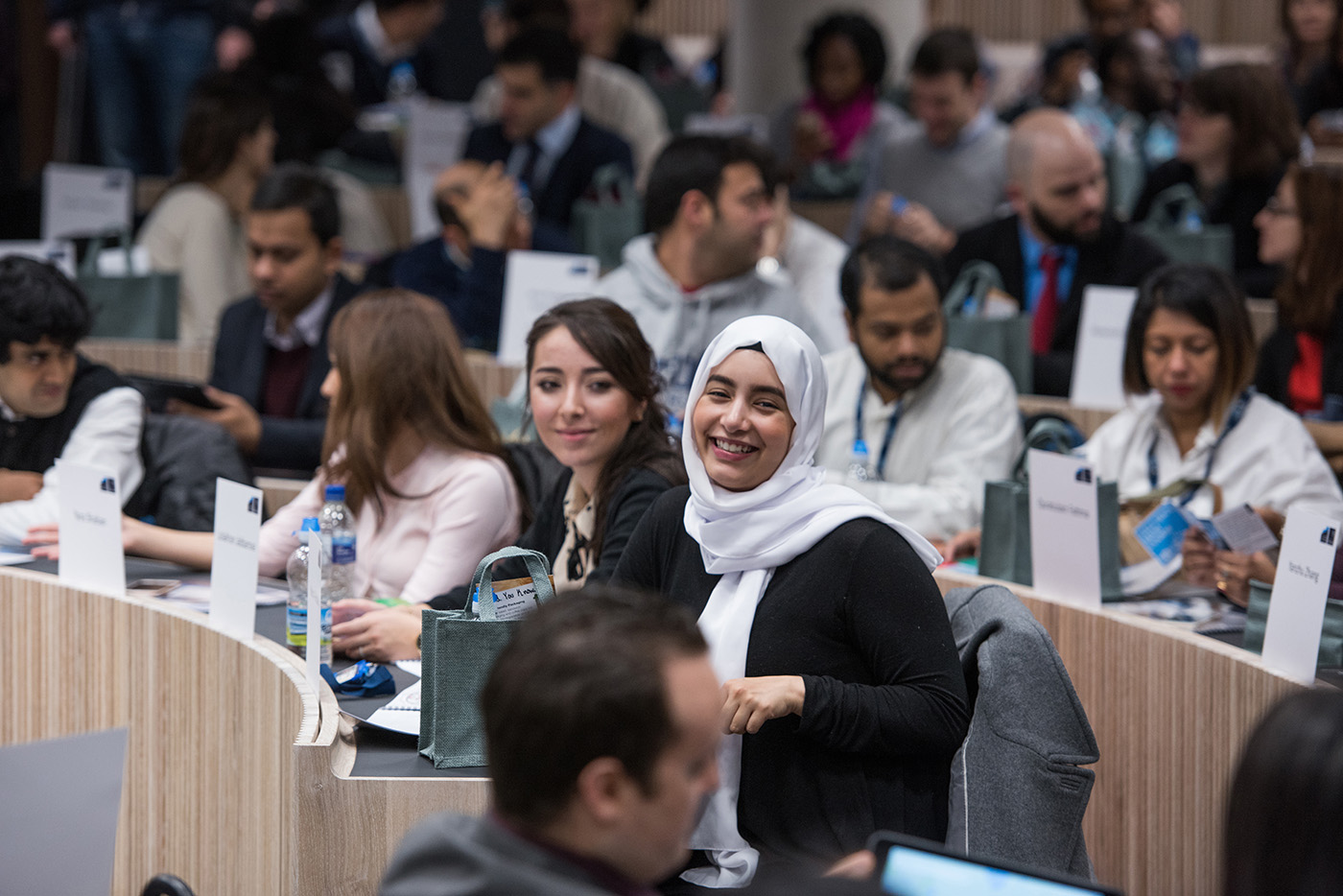
“Can you describe the moment the President made the decision for Ghana to request IMF financing support and how you felt then?”, a student asked.
I was reminded why the case teaching method, central to the teaching of the Blavatnik School of Government, is such a powerful tool for shaping public policy leaders. It is one thing to analyse policy decisions in theory; it is quite another to confront, even in a classroom setting, the lived reality of making those decisions under pressure.
How case teaching works
The strength of this method, championed by the Case Centre on Public Leadership at the Blavatnik School, lies in its immersive nature. Rather than learning about policy dilemmas abstractly, students are placed at the centre of them. They step into the role of a protagonist, typically a senior leader, facing a difficult decision, often with incomplete information and under time constraints.
They must analyse complex situations, apply theory, engage with diverse perspectives and communicate their reasoning clearly. As importantly, they must listen, often to peers with different viewpoints and learn to build consensus, as leaders do in practice. This process develops not only analytical capability, but also the interpersonal and judgement-based skills essential for public leadership.
There is also a strong pedagogical foundation for this approach. Research on adult learning shows that ideas acquired through active engagement, discussion and storytelling are more likely to be retained and applied. When students arrive at insights through their own reasoning, those lessons endure.
In the case method, the instructor’s role is not to provide answers, but to guide inquiry and facilitate learning.
The Ghana–IMF case
As part of my Visiting Fellowship at the Blavatnik School, I collaborated with Dean Ngaire Woods, Professor Emily Jones and the School’s Case Centre on Public Leadership, to develop a case study on Ghana’s 2022 macroeconomic crisis. The case draws on publicly available data, academic research and my own experience at the time as Second Deputy Governor of the Bank of Ghana.
In early 2022, Ghana faced severe macroeconomic pressures. Following a period of strong growth, a series of external shocks, including the COVID-19 pandemic, global inflationary pressures and the war in Ukraine, had significantly weakened the country’s fiscal and external position. Access to international capital markets had effectively closed following credit rating downgrades, inflation was rising rapidly and pressures on foreign exchange reserves were intensifying, while domestic political tensions were also increasing.
Against this backdrop, the government faced a difficult decision: whether to return to the International Monetary Fund (IMF) for financial support, despite a prior commitment not to do so following the conclusion of the previous programme in 2019.
The case invites students to grapple with the same questions policymakers faced at the time: What were the available options? What trade-offs would an IMF programme entail? How could short-term stabilisation be balanced with longer-term economic and social considerations?
Enriching learning in the classroom
The case was taught as part of the Master of Public Policy programme’s Applied Policy module on Managing International Organisations, led by Dean Ngaire Woods. The objective was to deepen students’ understanding of the role of international institutions such as the IMF in the context of member countries’ macroeconomic crises, the complexities of government decision-making under pressure and the IMF’s own decision-making processes.
Classroom discussions explored the political, technical and communications dimensions of engaging with the IMF. Students assessed the risks and benefits of different policy options, considered their distributional impacts and reflected on broader implications for economic governance and institutional credibility.
The discussion was enriched by the diversity of perspectives in the room. Students brought varied professional backgrounds, country and regional experiences and analytical approaches. Ngaire facilitated the discussion with clarity and depth, situating the Ghana case within her extensive academic and advisory work on international organisations, including IMF-supported programmes across regions, and within broader debates on the future of the international financial architecture and multilateralism.
Students asked direct and thoughtful questions, including about the personal dimensions of leadership during such periods ranging from professional dilemmas to my experience of negotiating as part of the Ghanaian side with my former employer the IMF on the other side. Responding required revisiting a period of considerable intensity, when decisions carried far-reaching consequences. It reinforced an important point: leadership is not only technical, it is deeply human.
A key insight that emerged from the discussion was the importance of adapting policy prescriptions to context. While theoretical frameworks and international best practices provide valuable guidance, they are not always directly transferable. As I noted in class, “while trying to save the patient, it is important that the treatment does not produce worse outcomes than the disease.” This requires policymakers to take ownership of their decisions, assess constraints carefully and help to shape feasible policy outcomes. As Dean Ngaire Woods added, this also requires governments to proactively adopt a coordinated, whole-of-government approach in engaging with stakeholders such as the IMF.
The session was further enriched by contributions from other Fellows, including senior practitioners from government and the private sector, who shared insights from their own leadership experiences. This breadth of engagement reflects one of the Blavatnik School’s distinctive strengths.
Looking Ahead
As public policy challenges continue to evolve, there is a growing need for approaches to education that prepare leaders for complexity rather than simplicity. Blending strong academic foundations with experiential learning through case teaching offers one such approach. It equips students not only to analyse policy problems, but to navigate them in practice.
Expanding access to such approaches, particularly for practitioners at different stages of their careers, can contribute meaningfully to strengthening leadership and improving governance outcomes globally.
Ultimately, effective public leadership cannot be taught through theory alone. It must be practised, tested and reflected upon. The case method provides a powerful way of doing exactly that.